Areolar vs Adipose Tissue: 8 Key Differences Explained
Understanding the different types of tissues in our body helps us appreciate how our complex biological systems function. Among these, connective tissues play crucial roles in providing support, protection, and connectivity between other tissue types. Two particularly important types of loose connective tissue are areolar and adipose tissues, which serve distinct yet complementary functions within our body.
Have you ever wondered what keeps your skin attached to your muscles or what forms that cushiony layer beneath your skin? The answers lie in these specialized tissues that work silently to maintain your body's structural integrity and functionality. Let's dive into the fascinating world of areolar and adipose tissues to uncover their unique characteristics and the crucial roles they play in maintaining our health.
What is Areolar Tissue?
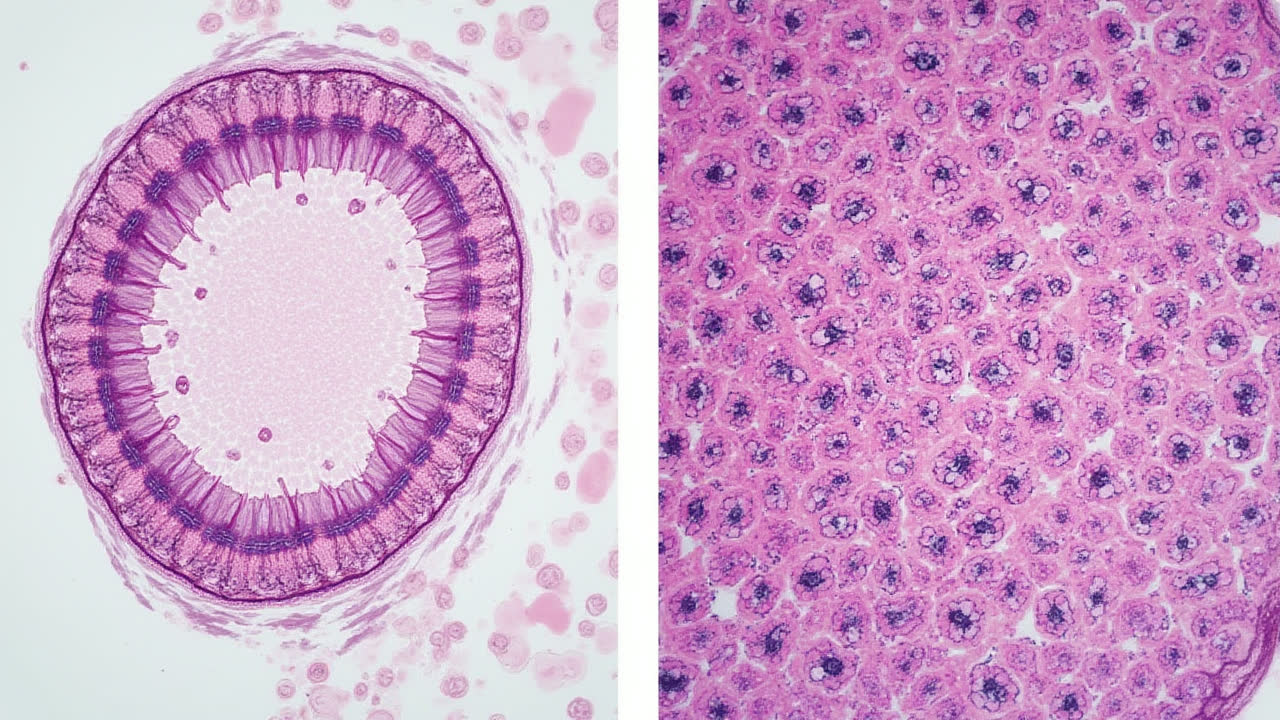
Areolar tissue is perhaps the most widely distributed connective tissue in the human body. It's a type of loose connective tissue characterized by a delicate, loose arrangement of fibers that creates a mesh-like structure. This mesh contains numerous cells scattered throughout, including fibroblasts, macrophages, mast cells, plasma cells, and some adipocytes.
The name "areolar" comes from the Latin word "areola," meaning "small space," which perfectly describes its structure with small fluid-filled spaces between fibers. These spaces allow for some flexibility and movement. You'll find areolar tissue between the skin and muscles, surrounding blood vessels and nerves, and filling spaces between organs.
One of the remarkable features of areolar tissue is its rich blood supply, which enables it to play a crucial role in inflammation and immune responses. When an infection occurs, the loose arrangement of fibers in areolar tissue allows immune cells to move freely to the site of infection. Additionally, the tissue's ability to hold water helps maintain fluid balance and allows nutrients to diffuse easily to nearby cells.
The primary functions of areolar tissue include providing support to organs, offering elasticity to tissues, permitting the passage of nerves and blood vessels, and creating a medium for exchange of substances between blood and tissues. Think of it as the body's packing material that cushions and connects while allowing necessary movement and exchange to occur.
What is Adipose Tissue?
Unlike the more diverse areolar tissue, adipose tissue is specialized primarily for one important function: fat storage. This specialized loose connective tissue consists mainly of adipocytes (fat cells), which are cells specifically designed to store energy in the form of triglycerides.
Each adipocyte in adipose tissue contains a large, single fat droplet that pushes the cell's nucleus and cytoplasm to the periphery, giving it the classic "signet ring" appearance under a microscope. When we consume more calories than we burn, these cells expand to store the excess energy, and conversely, they shrink when we use stored fat for energy during fasting or exercise.
Adipose tissue is predominantly found beneath the skin (subcutaneous fat), around internal organs (visceral fat), in bone marrow, and in breast tissue. The distribution of adipose tissue differs between men and women due to hormonal influences, with women typically having more subcutaneous fat in areas like the hips and thighs, while men tend to accumulate more visceral fat around the abdomen.
Beyond its well-known role as an energy reservoir, adipose tissue serves several other critical functions. It acts as a thermal insulator, helping to maintain body temperature by preventing heat loss. It provides mechanical protection, cushioning vital organs from physical trauma. Furthermore, adipose tissue is now recognized as an active endocrine organ that secretes hormones and cytokines (known as adipokines) that influence metabolism, inflammation, and even reproductive function.
Comparative Analysis: Areolar vs Adipose Tissue
| Feature | Areolar Tissue | Adipose Tissue |
|---|---|---|
| Definition | Loose connective tissue with mesh-like fiber arrangement and various cell types | Specialized connective tissue primarily composed of fat-storing adipocytes |
| Primary Cell Types | Fibroblasts, macrophages, mast cells, plasma cells, some adipocytes | Primarily adipocytes (fat cells) |
| Location | Between skin and muscles, around blood vessels and nerves, between organs | Under the skin, around internal organs, in bone marrow, breast tissue |
| Primary Functions | Support, elasticity, medium for exchange, defense against pathogens | Energy storage, thermal insulation, mechanical protection, endocrine functions |
| Fiber Arrangement | Loose, irregular meshwork of collagen, elastic, and reticular fibers | Minimal fibers, mostly between clusters of adipocytes |
| Blood Supply | Rich vascularization | Extensive blood supply, especially in brown adipose tissue |
| Metabolic Activity | Moderate | High, particularly in brown adipose tissue |
| Response to Nutritional Changes | Minimal changes | Significant expansion or contraction based on caloric intake |
The Interconnected Relationship Between Areolar and Adipose Tissues
While we've examined these tissues as distinct entities, in reality, they often work together and can even transition into one another under certain conditions. For instance, areolar tissue contains some adipocytes, and under conditions of excess calorie intake, these adipocytes can multiply and expand, effectively transforming areas of areolar tissue into adipose tissue.
Both tissues also share common embryonic origins, developing from the mesenchyme during embryonic development. This common lineage explains some of their shared characteristics and their ability to transform under specific physiological conditions.
I remember during my anatomy studies being fascinated by how these tissues interact at their boundaries - it's not always a clear-cut division, but rather a gradual transition from one tissue type to another. This blending of structure and function is a testament to our body's remarkable adaptability and efficiency.
Clinical Significance and Health Implications
Understanding these tissue types has significant implications for health and disease. For example, excessive accumulation of adipose tissue leads to obesity, which is associated with numerous health problems including diabetes, cardiovascular disease, and certain cancers. The distribution of adipose tissue also matters - visceral fat (around internal organs) poses greater health risks than subcutaneous fat.
Areolar tissue, with its role in immune response and inflammation, is involved in various inflammatory conditions. Its loose structure can also facilitate the spread of infections and cancer cells. During infection, increased blood flow to areolar tissue allows immune cells to reach the affected area quickly, but this can also lead to inflammation and swelling.
In medicine, the properties of these tissues are considered during surgical procedures and drug administration. For instance, subcutaneous injections are delivered into the adipose tissue beneath the skin, where the drug can be gradually absorbed into the bloodstream. Meanwhile, the loose nature of areolar tissue makes it an important consideration in reconstructive surgery and tissue engineering.
Isn't it remarkable how these seemingly simple tissues have such profound impacts on our health? The more we understand them, the better we can address the various conditions associated with their dysfunction.
Frequently Asked Questions About Areolar and Adipose Tissues
What happens to areolar and adipose tissues during weight loss?
During weight loss, adipose tissue undergoes the most dramatic changes. As the body burns stored fat for energy, adipocytes shrink in size but typically don't decrease in number. This is why weight regain can occur rapidly - the cells are already there, ready to expand again. Areolar tissue remains relatively unchanged during weight loss, though its hydration may be affected by overall body hydration status.
Can areolar tissue transform into adipose tissue?
Yes, to some extent. Areolar tissue contains some adipocytes and under conditions of excess calorie intake, these fat cells can proliferate and expand, effectively transforming portions of areolar tissue into adipose tissue. This transformation is part of the body's adaptive response to energy surplus and helps explain why fat accumulation patterns can change over time.
How do these tissues differ between children and adults?
Children typically have more brown adipose tissue (a specialized type that generates heat) than adults, particularly around the shoulders and neck. As we age, areolar tissue may lose some elasticity due to changes in collagen and elastic fibers. Adults tend to have more white adipose tissue with distribution patterns influenced by hormones, which is why men and women develop different body shapes during puberty and maintain these differences into adulthood.
Conclusion
Areolar and adipose tissues, though both classified as loose connective tissues, serve distinct yet complementary functions in the human body. Areolar tissue provides the structural framework, elasticity, and medium for exchange, while adipose tissue specializes in energy storage, insulation, and endocrine functions.
The key differences between these tissues lie in their cellular composition, fiber arrangement, location, and primary functions. Areolar tissue is more diverse in cell types and performs multiple supportive functions, while adipose tissue is more specialized around its fat-storing capabilities.
Understanding these differences helps us appreciate how our body maintains its structural integrity while accommodating the dynamic needs of energy storage and utilization. These seemingly simple tissues contribute significantly to our overall health and wellbeing, highlighting the remarkable complexity and efficiency of the human body.