Chromatin vs Nucleosome: Understanding DNA Packaging | Cell Biology
Chromatin vs Nucleosome: Understanding DNA Packaging
When you think about DNA, what comes to mind? Perhaps you picture the famous double helix structure. But here's something fascinating that many people don't realize: in our cells, DNA isn't just floating around as separate strands. Instead, it's incredibly well-organized through a sophisticated packaging system involving chromatin and nucleosomes.
You know, I remember when I first learned about this in college - it completely changed my understanding of how our genetic material is organized. The human genome contains about 3 billion base pairs, which would stretch to about 2 meters if laid end to end. Yet somehow, all this genetic material fits inside a cell nucleus that's only about 0.005 millimeters in diameter!
This remarkable feat is achieved through the intricate packaging system of chromatin and nucleosomes. But what exactly are these structures, and how do they differ? Let's dive into this fascinating world of cellular organization.
What Is Chromatin? The DNA's Protective Packaging
Chromatin is essentially the complete package - it's the complex of DNA and proteins found in the nucleus of our cells. Think of it as a carefully organized filing system that keeps all our genetic information neat, accessible, and protected.
During the cell's resting phase (called interphase), chromatin appears as those thread-like structures we can observe under a microscope. It's not just random DNA clumped together - it's a highly organized system that serves multiple purposes. It packs DNA tightly, regulates which genes are turned on or off, and protects our genetic material from damage.
I've always found it interesting that chromatin comes in two main forms - euchromatin and heterochromatin. Euchromatin is like the "open book" of our genetic library - loosely packed and actively being "read" for gene expression. Heterochromatin, on the other hand, is more like books on storage - tightly packed and mostly inactive.
What Is a Nucleosome? The Building Blocks of Chromatin
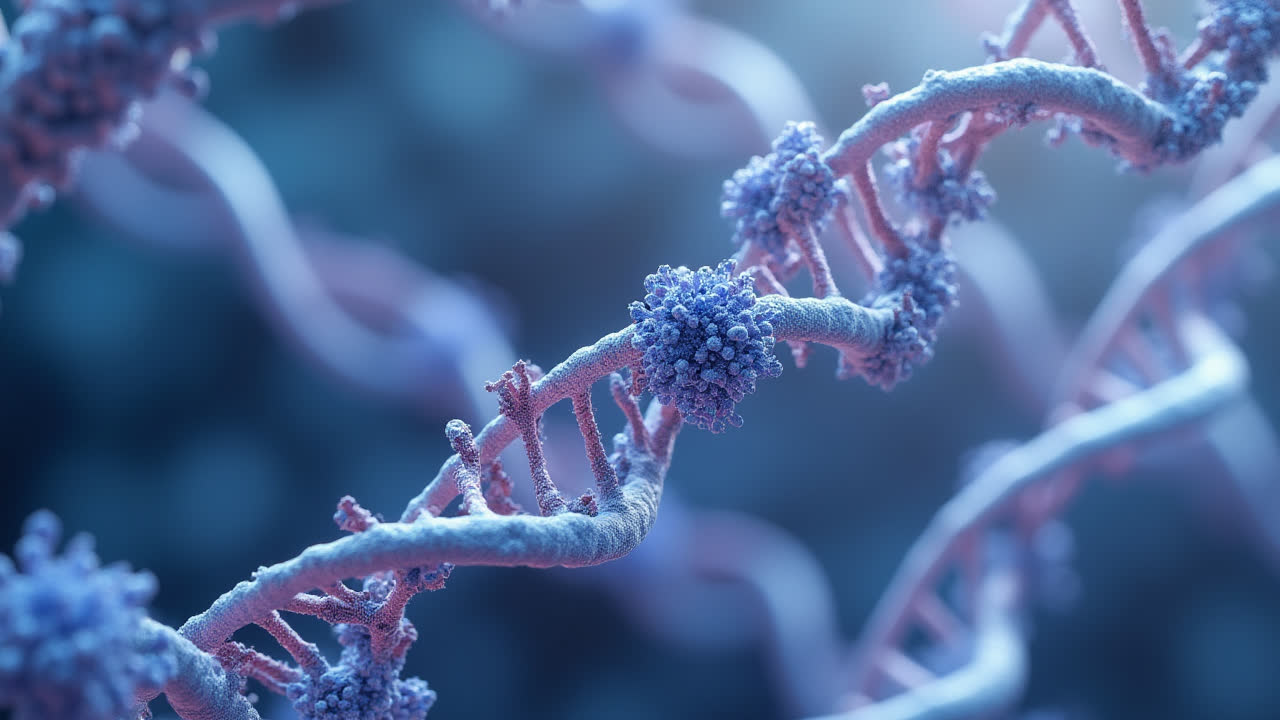
If chromatin is the whole filing cabinet, then nucleosomes are the individual file folders. A nucleosome consists of about 147 base pairs of DNA wrapped around a protein core made of eight histone proteins. It's fascinating - these histone proteins are like spools, and DNA wraps around them 1.65 times, kind of like thread around a spool.
What I find particularly clever about nucleosomes is their "beads on a string" appearance when viewed under the electron microscope. These beads are connected by stretches of DNA called linker DNA, usually about 20 base pairs long. It reminds me of a necklace where the beads are the nucleosomes and the string is the linker DNA.
Each nucleosome includes an additional histone protein called H1 that binds to the linker DNA, creating what's known as a chromatosome. This H1 protein acts like a clasp on a necklace, helping to compact the chromatin even further.
The Key Differences: Chromatin vs Nucleosome
| Characteristic | Chromatin | Nucleosome |
|---|---|---|
| Definition | Complex of DNA and proteins forming chromosomes | Basic structural unit of chromatin |
| Structure | Thread-like, looped structure | DNA wrapped around histone proteins |
| DNA Length | 40-100 kb per loop | 166 base pairs |
| Diameter | 30 nm fiber | 11 nm |
| Function | DNA packaging, gene regulation | Basic packaging unit |
| Flexibility | Can be loose (euchromatin) or tight (heterochromatin) | Relatively uniform structure |
| Visibility | Observable during interphase | "Beads on a string" appearance |
| Composition | Multiple nucleosomes plus linker DNA | DNA + 8 histone proteins + H1 |
How Nucleosomes Form Chromatin: The Assembly Process
The relationship between nucleosomes and chromatin is quite straightforward - nucleosomes are the building blocks from which chromatin is constructed. When multiple nucleosomes connect via linker DNA, they form a chain that can further coil and fold to create higher-order chromatin structures.
I often think of this like building with LEGO blocks. Individual nucleosomes are like the basic bricks, and chromatin is the completed structure. The amazing thing is how this simple repeating unit can create such complex and functional structures.
During cell division, chromatin condenses even further to form the familiar X-shaped chromosomes we've all seen in biology textbooks. This packaging allows 2 meters of DNA to fit into a space smaller than a pinhead!
Functional Differences in Gene Expression
One of the most important differences between chromatin and nucleosomes relates to their role in gene expression. While nucleosomes act as basic packaging units, chromatin's arrangement determines whether genes are accessible for transcription.
When chromatin is loosely packed (euchromatin), nucleosomes can move or be temporarily disassembled, allowing transcription factors and RNA polymerase to access DNA. It's like opening a book to read a specific page. Conversely, tightly packed chromatin keeps nucleosomes firmly in place, effectively "closing the book" on certain genetic information.
This dynamic process allows cells to regulate gene expression without changing the underlying DNA sequence - a field known as epigenetics. The beauty of this system is its reversibility; nucleosomes can be modified through histone modifications, allowing chromatin structure to change as needed.
The Clinical and Research Relevance
Understanding the differences between chromatin and nucleosomes isn't just academic. These structures play crucial roles in various diseases, including cancer. For instance, mutations in histone proteins can disrupt normal chromatin structure, leading to abnormal gene expression patterns.
I've been following research showing that chromatin-modifying drugs are becoming increasingly important in cancer treatment. These drugs can alter chromatin structure, potentially reactivating tumor suppressor genes that were silenced by abnormal chromatin packaging.
Scientists are also exploring how environmental factors can affect chromatin and nucleosome organization, influencing gene expression patterns across generations. It's a rapidly evolving field that highlights the importance of understanding these basic cellular structures.
Frequently Asked Questions
Why is chromatin found only in eukaryotes and not prokaryotes?
Eukaryotic cells have much larger genomes than prokaryotes, requiring sophisticated packaging systems. Additionally, eukaryotes need complex gene regulation mechanisms that chromatin provides. Prokaryotes have simpler DNA organization with nucleoid structures instead of true chromatin.
How do nucleosomes affect DNA accessibility during gene expression?
Nucleosomes regulate DNA accessibility by physically blocking or allowing access to DNA sequences. When nucleosomes are tightly packed, they prevent transcription factors from binding. Histone modifications can alter nucleosome structure, creating "open" chromatin regions where genes can be actively transcribed.
What happens to chromatin during cell division?
During cell division, chromatin undergoes dramatic compaction. The relatively open chromatin fiber condenses into highly compacted chromosomes, increasing DNA density about 10,000-fold. This ensures accurate DNA segregation during mitosis and meiosis. After division, chromosomes decondense back into chromatin for normal cellular functions.
Looking Forward: The Future of Chromatin Research
As we continue to unravel the mysteries of chromatin and nucleosomes, new therapeutic possibilities emerge. The field of epigenetic medicine is rapidly advancing, with researchers developing drugs that can precisely target chromatin modifications.
I'm particularly excited about the potential for chromatin-based diagnostics. Since chromatin states reflect cellular activity, analyzing chromatin patterns could help detect diseases earlier than traditional methods. Imagine being able to identify cancer cells by their chromatin signatures before tumors become visible!
The distinction between chromatin and nucleosomes, while fundamental to understanding DNA packaging, represents just the beginning of our exploration into how cells organize and regulate their genetic information. As technology advances, our understanding of these structures will undoubtedly deepen.
Final Thoughts
Whether you're a student, researcher, or just curious about cellular biology, understanding the relationship between chromatin and nucleosomes provides insight into one of life's most elegant organizational systems. While nucleosomes serve as the building blocks, chromatin represents the functional architecture that governs our genetic potential.
The next time you think about DNA, remember that it's not just a simple molecule floating around our cells. It's part of an incredibly sophisticated system that combines structural beauty with functional precision - a system built from the ground up, starting with the humble nucleosome.