Cnidocyte vs Nematocyst: Understanding Key Differences in Cnidarians
Cnidocyte vs Nematocyst: Understanding Key Differences in Cnidarians
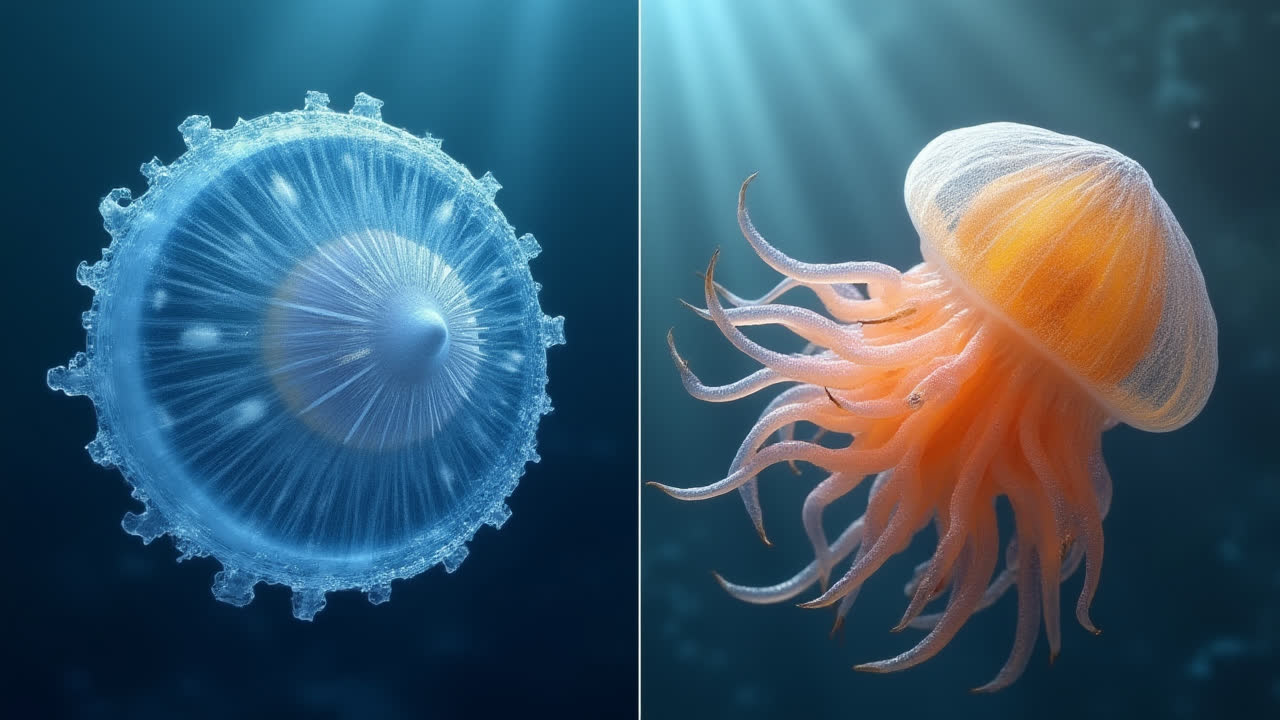
Have you ever wondered how jellyfish and sea anemones sting their prey? The fascinating world of cnidarians reveals one of nature's most remarkable hunting mechanisms. At the heart of this system are two critical structures: cnidocytes and nematocysts. While often confused, these two components play distinct roles in how creatures like jellyfish, corals, and hydrae capture food and defend themselves.
Cnidarians, a diverse phylum of predominantly marine animals, have evolved an ingenious method for hunting and self-defense. Their tentacles contain specialized cells called cnidocytes that house powerful stinging organelles known as nematocysts. When triggered, these microscopic structures can fire with incredible force and speed, injecting toxins into prey or potential threats. Understanding the difference between these two structures helps illuminate one of nature's most effective predatory systems.
In this article, we'll explore the structural differences, functions, and unique characteristics of cnidocytes and nematocysts. You'll discover how these tiny but powerful components work together to create the infamous sting that has earned cnidarians both fascination and respect from marine enthusiasts and scientists alike. Whether you're a biology student, marine life enthusiast, or simply curious about ocean creatures, this exploration will deepen your appreciation of these remarkable evolutionary adaptations.
What is a Cnidocyte? Structure and Function
A cnidocyte is a specialized stinging cell found in cnidarians that functions as a key component in their predatory arsenal. Also referred to as cnidoblasts or nematocytes, these cells are primarily located near the tips of tentacles in creatures like jellyfish, sea anemones, corals, and hydrae. Some cnidocytes may also be found in the endoderm, though they are predominantly ectodermal cells.
Structurally, cnidocytes are typically rounded or oval-shaped cells with a conspicuous nucleus positioned at the basal side. What makes these cells truly unique is what they contain inside - a giant, specialized secretory organelle called a nematocyst. This organelle is essentially a capsule filled with a mixture of proteins and phenols collectively known as hypnotoxin. Think of the cnidocyte as the housing unit or the "gun," while the nematocyst represents the "bullet" that delivers the sting.
Each cnidocyte features a hair-like sensory projection called a cnidocil that acts as a trigger. When this trigger is stimulated - whether by physical contact with prey or certain chemical cues - it initiates the discharge mechanism. The cnidocyte also contains restraining structures like the "lasso" (a restraining thread) and contractile muscle fibrils at its base, which prevent the nematocyst from being completely ejected from the cell during discharge.
I've always been fascinated by how these tiny cells pack such a powerful punch. The cnidocyte represents an evolutionary marvel - a single cell that functions as both a sensory receptor and a weapon delivery system. It's amazing to think that something so microscopic can bring down prey many times its size through this specialized mechanism. The complexity packed into this single cell type demonstrates nature's incredible efficiency in solving predatory challenges in aquatic environments.
What is a Nematocyst? Structure and Discharge Mechanism
The nematocyst represents the business end of the cnidarian's stinging apparatus - it's the actual organelle inside the cnidocyte that delivers the sting. Also called cnidocyst or cnida, the nematocyst consists of an ejectable thread that, when discharged, causes the characteristic sting associated with jellyfish and other cnidarians. If the cnidocyte is the gun, then the nematocyst is definitely the bullet.
Structurally, a nematocyst consists of a capsule (the pyriform sac mentioned earlier) that contains the potent hypnotoxin mixture. The outer end of this sac is invaginated, forming a coiled tubular filament inside the sac itself. At the base of this tubular filament is a swollen structure called the butt, which carries three spine-like projections known as barbs. The entire structure is covered by a lid called the operculum.
What makes nematocysts particularly impressive is their discharge mechanism. In its resting state, the cnidocyte containing the nematocyst is not permeable to water. However, the hypnotoxin inside creates a hypertonic environment compared to the surrounding seawater. When the cnidocil receives a mechanical or chemical stimulus, something remarkable happens - the cell's permeability suddenly increases, allowing water to rush in. This creates a dramatic increase in hydrostatic pressure inside the sac, forcing open the operculum (lid) and causing the thread tube to be discharged with tremendous force.
The speed and force of this discharge is truly mind-blowing. Some research suggests that nematocyst discharge occurs in less than a microsecond, making it one of the fastest cellular processes in nature. When the thread penetrates the victim's tissues, it injects the toxin, which can paralyze small prey or cause painful symptoms in larger animals, including humans who accidentally brush against creatures like jellyfish.
Cnidarians possess approximately 30 different types of nematocysts, which can be classified into three main groups based on their function:
- Penetrants - The largest and most complex nematocysts, designed to pierce the skin or exoskeleton of prey
- Glutinants - Featuring sticky surfaces used to capture and hold prey
- Volvents - Containing short, thick, and spineless nematocysts that entangle prey
The diversity of nematocyst types reflects the specialized predatory strategies that different cnidarian species have evolved. Some are optimized for capturing fast-moving prey, while others are better suited for subduing larger organisms or deterring potential predators. This specialization has allowed cnidarians to occupy various ecological niches despite their relatively simple body plan.
Comprehensive Comparison: Cnidocyte vs Nematocyst
Now that we've explored each structure individually, let's directly compare cnidocytes and nematocysts to clarify their relationship and key differences. Understanding how these two components interact helps paint a complete picture of the cnidarian stinging mechanism that has evolved over millions of years.
| Comparison Point | Cnidocyte | Nematocyst |
|---|---|---|
| Definition | A specialized stinging cell containing a cnidocyst/nematocyst | An organelle inside the cnidocyte containing an ejectable thread that delivers toxin |
| Biological Classification | A complete cell (cellular level) | An organelle (subcellular level) |
| Alternative Names | Cnidoblast, nematocyte | Cnidocyst, cnida |
| Location | Found in the ectoderm, primarily on tentacles | Located inside the cnidocyte |
| Primary Function | Houses and regulates the discharge of the nematocyst | Delivers toxin to prey or predators |
| Components | Contains nucleus, cytoplasm, and the nematocyst organelle | Contains capsule, coiled thread, barbs, and hypnotoxin |
| Trigger Mechanism | Features the cnidocil (sensory hair) that initiates discharge | Passive; discharged when triggered by the cnidocyte |
| Evolutionary Significance | Represents specialized cell evolution in cnidarians | Represents specialized organelle evolution for predation |
This relationship between cnidocyte and nematocyst demonstrates a fascinating example of biological specialization. The cell (cnidocyte) has evolved to house, protect, and control the discharge of its specialized internal weapon (nematocyst). This system allows for precise targeting and deployment of the stinging mechanism, maximizing predatory efficiency while conserving energy and resources.
Ecological and Evolutionary Significance
The cnidocyte-nematocyst system represents one of the most successful predatory adaptations in the animal kingdom. For organisms with relatively simple body plans and no central nervous system, cnidarians have developed an extraordinarily sophisticated hunting mechanism. This system has allowed them to thrive for over 600 million years, predating even the dinosaurs by hundreds of millions of years.
From an ecological perspective, this stinging mechanism has enabled cnidarians to become effective predators despite lacking complex sensory organs or centralized brains. Jellyfish, for instance, can capture and consume fish, crustaceans, and other prey that might otherwise easily escape a creature with such limited mobility. The diversity of nematocyst types has also allowed different cnidarian species to specialize in capturing different prey types, reducing competition and enabling greater biodiversity within the phylum.
For humans, encounters with cnidarian stinging cells can range from mildly uncomfortable to potentially fatal. Some jellyfish species, like the box jellyfish (Chironex fleckeri), possess nematocysts potent enough to kill an adult human within minutes. Other species cause painful welts that may persist for days or weeks. The study of cnidocyte and nematocyst function has led to important medical applications, including the development of treatments for jellyfish stings and research into potential pharmaceutical applications of cnidarian toxins.
Perhaps most fascinating is how this cellular-level mechanism has remained largely unchanged for hundreds of millions of years. When something works this effectively, evolutionary pressure tends to conserve rather than dramatically alter it. The cnidocyte-nematocyst system provides a window into ancient biological adaptations that continue to function with remarkable efficiency in modern oceans.
Frequently Asked Questions About Cnidocytes and Nematocysts
Are cnidocytes present in all marine animals?
No, cnidocytes are exclusively found in organisms belonging to the phylum Cnidaria, which includes jellyfish, sea anemones, corals, and hydrae. These specialized stinging cells are actually one of the defining characteristics of this phylum and are not present in other marine animals like fish, mollusks, or crustaceans. The presence of cnidocytes is so distinctive that it's often used as a taxonomic feature to identify and classify cnidarians. Even among cnidarians, the distribution, density, and types of cnidocytes can vary significantly between species, reflecting different predatory strategies and defensive needs.
Can nematocysts fire multiple times?
No, nematocysts are single-use weapons. Once a nematocyst has been discharged, it cannot be reloaded or used again. This is because the discharge process involves irreversible structural changes to the capsule and thread. When the nematocyst fires, the thread that was previously coiled inside the capsule is forcefully ejected and cannot be retracted or recoiled. After discharge, the cnidocyte containing the spent nematocyst is typically replaced by a new cnidocyte with a fresh nematocyst. This replacement process ensures that the cnidarian maintains its defensive and predatory capabilities despite the one-time-use nature of individual nematocysts. This is why cnidarians continuously produce new cnidocytes throughout their lives.
How do cnidarians control nematocyst discharge?
Despite lacking a conventional central nervous system, cnidarians have remarkable control over nematocyst discharge through several mechanisms. The primary trigger is the cnidocil, a hair-like sensory structure on the cnidocyte that responds to mechanical or chemical stimuli. However, many cnidarians can modulate this response based on various factors. Some species have simple neural networks that can inhibit discharge when the cnidarian's own tissues touch the cnidocil, preventing self-stinging. Environmental factors like water chemistry and prey-specific chemical signals can also influence discharge sensitivity. Additionally, some cnidarians appear to have rudimentary "learning" capabilities, becoming less likely to discharge nematocysts in response to non-threatening stimuli that occur repeatedly, which helps conserve these single-use weapons for genuine predatory or defensive situations.
Conclusion
Understanding the difference between cnidocytes and nematocysts illuminates one of nature's most elegant predatory systems. While closely related and often confused, these structures represent different biological levels - the cnidocyte is the specialized cell, while the nematocyst is the remarkable organelle contained within it. Together, they form a highly effective mechanism that has sustained cnidarians for hundreds of millions of years.
The cnidocyte provides the housing, sensory trigger, and control mechanism, while the nematocyst delivers the actual sting through its specialized thread and toxin delivery system. This relationship demonstrates natural engineering at its finest - a microscopic structure capable of lightning-fast discharge, precise targeting, and effective toxin delivery without requiring complex nervous or muscular systems.
For marine biologists, understanding these structures offers insights into evolutionary adaptations, predator-prey relationships, and the remarkable diversity of survival strategies in ocean ecosystems. For the rest of us, knowing about cnidocytes and nematocysts might just give us a new appreciation for the humble jellyfish - and perhaps a healthy respect for its stinging capabilities the next time we visit the beach!