CRT vs LCD: Comprehensive Guide to Display Technology Differences
The battle between CRT and LCD displays has been an interesting technological evolution to witness. Remember those bulky computer monitors that took up half your desk space? Those were CRT displays, and they dominated our viewing experience for decades before being largely replaced by the sleeker LCD panels we use today. But what exactly separates these two technologies, and is newer always better? Let's dive into the fascinating world of display technologies to find out.
When I first upgraded from my old CRT monitor to an LCD display back in the early 2000s, I was amazed by how much desk space I suddenly had. But I also noticed some differences in image quality that weren't always improvements. This personal experience sparked my interest in understanding the technical differences between these display types.
What is CRT Technology?
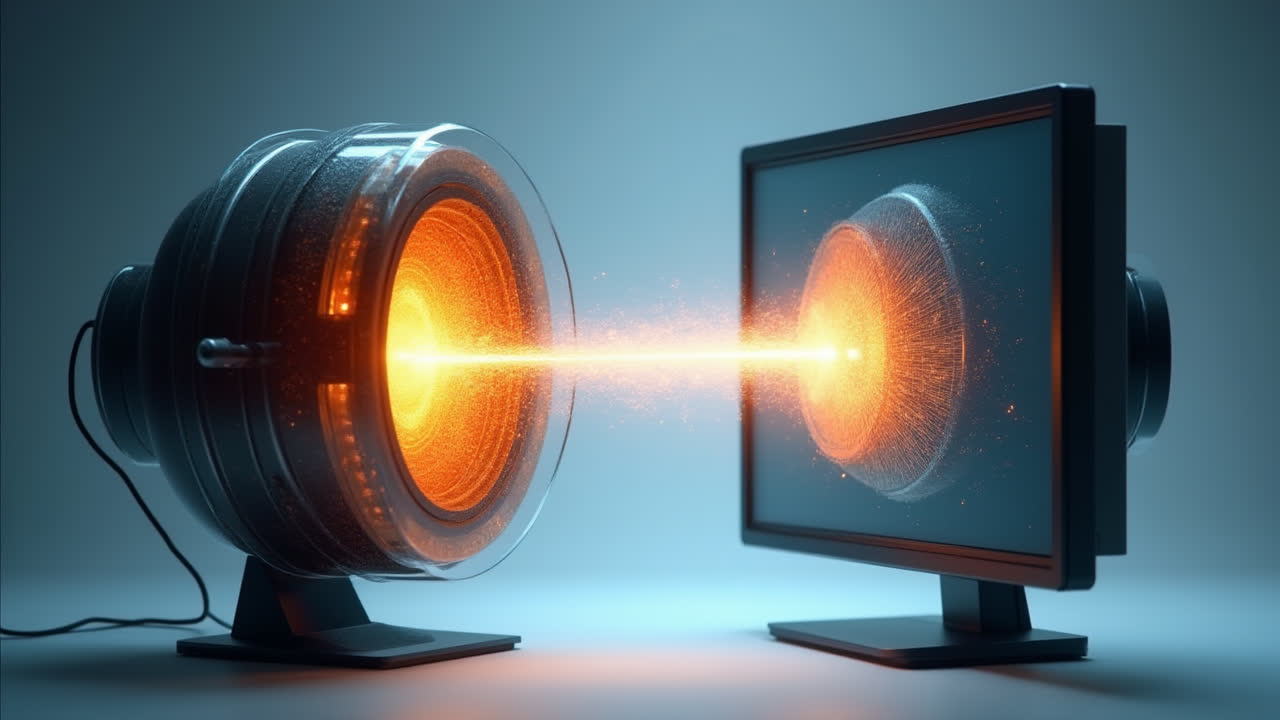
CRT stands for Cathode Ray Tube, a technology that might seem ancient by today's standards but was revolutionary when it first appeared. CRTs work through a fascinating process involving electron guns, phosphor-coated screens, and vacuum tubes. When you turned on your old television or computer monitor, heated metal filaments called cathodes would emit electrons, which were then accelerated by anodes to form beams. These electron beams would travel through a vacuum and strike the screen coated with phosphor, creating the glow that formed the images we saw.
Each pixel on a CRT screen consisted of regions coated with different phosphors that would emit red, green, or blue light when struck by electrons. Three electron guns produced three separate beams, each targeting specific phosphor regions to create various colors. The intensity of these beams determined the brightness of each color, allowing CRTs to display a wide spectrum of colors. To ensure precision, most CRTs used a shadow mask—a metal sheet with holes that prevented electron beams from striking neighboring pixels.
I still remember the satisfying thunk sound when turning on my old CRT monitor and the warm glow that would gradually appear as it powered up. There was something almost comforting about that process compared to the instant-on nature of today's displays. And despite their bulkiness, CRTs had some technical advantages that some professionals still appreciate today, particularly in fields requiring high color accuracy.
Understanding LCD Technology
LCD, or Liquid Crystal Display, represents the technology that eventually dethroned CRTs in most consumer applications. The operating principle behind LCDs is completely different from CRTs and involves manipulating light rather than generating it. An LCD screen consists of several layers, with two polarizing filters oriented perpendicular to each other. Normally, this arrangement would block all light, but that's where the magic of liquid crystals comes in.
Between these filters lies a layer of "twisted nematic liquid crystals," special molecules that can twist and rotate the plane of polarization of light passing through them. In their natural state, these crystals twist the light coming through the first filter so it can pass through the second filter. However, when an electric voltage is applied across the liquid crystal layer, the molecules untwist to varying degrees, controlling how much light passes through. This simple but ingenious mechanism allows LCDs to create images by precisely controlling the brightness of each pixel.
Like CRTs, LCD screens are made up of many pixels, each with three subpixels producing red, green, and blue light. Each subpixel has its own electrode, allowing independent control of each color's brightness. This technology has evolved significantly since its introduction, with improvements in response time, viewing angles, and color reproduction making modern LCDs vastly superior to early models.
When I switched to my first LCD monitor, I was immediately struck by how crisp text appeared compared to my old CRT. However, I did notice that fast-moving games didn't look quite as smooth. This was due to the slower response times of early LCDs, a limitation that manufacturers have worked hard to overcome in subsequent generations.
CRT vs LCD: Detailed Comparison
| Feature | CRT Displays | LCD Displays |
|---|---|---|
| Working Mechanism | Electron beams strike phosphor-coated screen | Liquid crystals twist to control light passage |
| Form Factor | Bulky, heavy, depth-requiring design | Slim, lightweight, wall-mountable |
| Power Consumption | High power usage (80-120 watts for typical monitor) | Energy efficient (20-30 watts for comparable size) |
| Image Quality | Excellent contrast ratio, deep blacks, no fixed resolution | Initially inferior but improved significantly with technology advances |
| Response Time | Virtually instantaneous (less than 1ms) | Initially slow (20ms+), modern panels achieve 1-5ms |
| Viewing Angles | Excellent from all angles | Initially poor, improved with IPS and other technologies |
| Lifespan | 10-15 years with image deterioration over time | 30,000-60,000 hours (backlight limited) |
| Current Applications | Specialty uses in medicine, science, and vintage gaming | Mainstream technology for all consumer displays |
Key Differences That Matter
Size and Form Factor
Perhaps the most obvious difference between display technologies is their physical size and weight. CRTs are inherently bulky due to the need for electron guns and a vacuum tube that deepens as screen size increases. In contrast, LCDs can be incredibly thin regardless of screen size. I still recall struggling to move my 21-inch CRT monitor between apartments during college—it probably weighed over 50 pounds! The switch to LCD technology has completely transformed how we use displays, enabling everything from wall-mounted TVs to ultra-thin laptops.
Image Quality Considerations
Contrary to what many assume, CRTs actually hold some advantages in image quality over LCDs. CRTs can display true blacks by simply not illuminating parts of the screen, while LCDs must block their backlight, which is never 100% effective. This gives CRTs an inherently better contrast ratio. Additionally, CRTs have no fixed resolution—they can display various resolutions equally well, while LCDs have a native resolution at which they perform best.
Motion handling is another area where traditional CRTs excel. Because electron beams can change instantly, CRTs don't suffer from motion blur like LCDs do. This is why some competitive gamers and video professionals continued using CRTs long after LCDs became mainstream. During my gaming days, I knew several friends who kept their CRT monitors specifically for first-person shooters where motion clarity was crucial.
Power Consumption and Environmental Impact
LCD displays are considerably more energy-efficient than their CRT counterparts. A typical 24-inch CRT monitor might consume 80-120 watts of power, while a similarly sized LCD typically uses only 20-30 watts. This efficiency difference becomes significant when considering the environmental impact and electricity costs over a device's lifetime. Modern LCD variants like LED-backlit displays further improve on this efficiency.
Additionally, CRTs contain significant amounts of lead and other potentially hazardous materials, making their disposal more problematic from an environmental perspective. When my old CRT finally died, I remember having to take it to a special electronics recycling center rather than regular disposal.
Current Relevance and Specialized Uses
While LCDs have largely replaced CRTs in consumer applications, CRT technology still finds use in specialized fields. Medical imaging, scientific research, and even certain artistic applications still utilize CRT displays for their unique properties. Some oscilloscopes and monitoring equipment in hospitals and laboratories continue to rely on cathode ray technology for its reliability and specific technical attributes.
There's also a growing community of vintage gaming enthusiasts who specifically seek out CRT displays for the authentic experience of playing older console games. These systems were designed with CRT limitations and quirks in mind, and some visual effects don't translate well to modern displays. I've attended retro gaming meetups where CRTs are prized possessions, carefully maintained for their ability to show classic games as originally intended.
Which Technology is Better?
The question of which display technology is "better" depends entirely on the specific use case and personal preferences. For most modern applications—from everyday computing to home entertainment—LCD technology and its variants (LED, OLED, etc.) offer clear advantages in terms of space efficiency, power consumption, and overall practicality.
However, it would be misleading to claim that LCD technology is superior in all aspects. CRTs still hold advantages in specific technical areas like motion clarity, contrast ratio, and the ability to display multiple resolutions natively. These advantages explain why some professionals and enthusiasts continued using CRTs even as LCDs became the dominant technology.
I've personally found that newer isn't always better in all aspects of technology. While I wouldn't trade my sleek LCD monitor for the desk-hogging CRT of yesteryear, I can appreciate that some image quality characteristics were actually better on older technology. Technology evolution often involves trade-offs rather than pure advancement.
That said, LCD technology has continued to evolve, addressing many of its early limitations. Modern variants like OLED displays offer perfect blacks and excellent contrast ratios while maintaining the slim form factor of LCD technology. Mini-LED backlighting has dramatically improved contrast on premium LCD panels. High refresh rate gaming monitors have eliminated concerns about motion clarity. For most users today, these advancements have made the few remaining advantages of CRT technology largely irrelevant.
Frequently Asked Questions About CRT and LCD Displays
Why did some gamers prefer CRT monitors over LCD displays?
Gamers often preferred CRT monitors because of their superior motion handling capabilities. CRTs have virtually instantaneous response times (under 1ms) since the electron beam can change immediately, resulting in no motion blur during fast-paced gaming. Early LCDs had response times of 16ms or higher, causing noticeable ghosting in fast-moving games. Additionally, CRTs could display multiple refresh rates natively, including the 120Hz that competitive gamers preferred, long before high-refresh LCDs became common. Many fighting game and FPS players stuck with CRTs until very recently when gaming-specific LCD monitors finally matched their performance needs.
Are CRT displays completely obsolete now?
While CRTs have largely disappeared from mainstream use, they aren't completely obsolete. They're still used in specific professional fields like medical imaging, scientific research, and broadcasting where certain CRT characteristics remain valuable. There's also a growing retro gaming community that specifically seeks out CRTs for playing vintage console games, as these games were designed with CRT display properties in mind. Some visual effects in older games actually rely on CRT quirks like scan lines and don't look as intended on modern displays. That said, for general consumer and office use, CRTs have indeed been rendered obsolete by LCD technology and its variants.
What advancements have made modern LCD displays better than early versions?
Modern LCD displays have overcome many of the limitations that early models faced. Key advancements include vastly improved response times (from 20+ ms down to 1ms in gaming monitors), higher refresh rates (up to 360Hz), and better viewing angles through IPS, VA, and other panel technologies. Backlight technology has evolved from CCFL to LED, enabling thinner designs, better energy efficiency, and features like local dimming for improved contrast. Color reproduction has also improved dramatically, with many modern LCDs capable of displaying wider color gamuts like DCI-P3 and higher bit depths. Additionally, technologies like Quantum Dot and Mini-LED have further enhanced LCD performance, bringing them closer to OLED quality while maintaining LCD's advantages in brightness and longevity.
The Legacy of Display Technology Evolution
The transition from CRT to LCD represents more than just a change in display technology—it symbolizes the broader evolution of consumer electronics from bulky, power-hungry devices to the sleek, efficient products we use today. While LCDs have clearly won the mainstream battle, the story of display technology continues to evolve with OLED, MicroLED, and other emerging technologies promising even better visual experiences.
Perhaps the most interesting aspect of this technological evolution is how it shapes our expectations and experiences. Those of us who remember CRT displays might occasionally notice the subtle differences in how content appears on modern screens. Younger generations who grew up with LCD technology may never experience the distinctive warmth of a CRT image or the satisfaction of degaussing a monitor with that characteristic "thunk" sound.
What's your experience with different display technologies? Do you remember using CRT monitors or TVs? Have you noticed differences when switching to newer display types? The evolution of how we view digital content remains one of the most tangible aspects of technological progress in our daily lives, and understanding these differences enhances our appreciation of both past and present innovations.