Diethyl Ether vs Petroleum Ether: Key Differences Explained
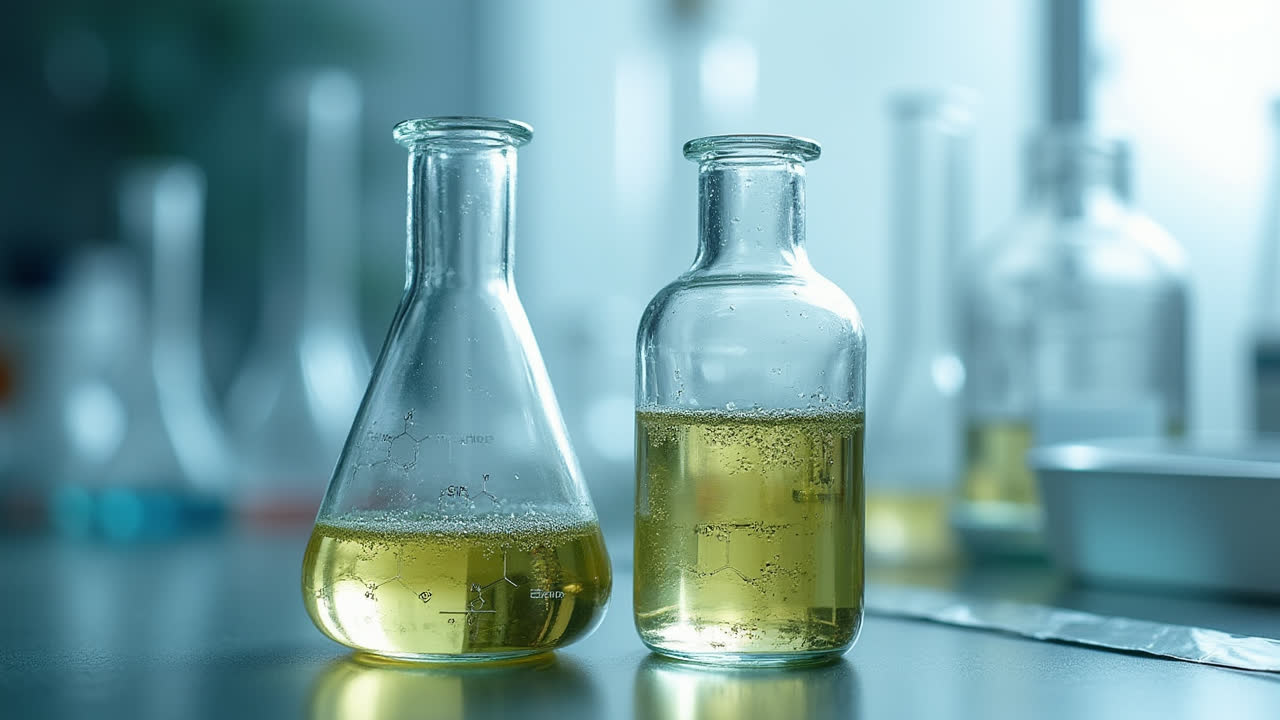
Diethyl Ether vs Petroleum Ether: Understanding the Key Differences
When it comes to chemical solvents, the names diethyl ether and petroleum ether might sound confusingly similar. You know what? I've seen even experienced lab techs scratch their heads over these two. Despite their similar names, these compounds are fundamentally different in structure, properties, and applications. If you're working in a laboratory, industrial setting, or just curious about chemistry, understanding these differences is crucial for safety and efficiency.
Let me tell you something interesting - the first time I encountered these solvents in my chemistry lab, I nearly made the mistake of thinking they were interchangeable. Boy, was I wrong! The truth is, while both are valuable solvents, their chemical makeup and behavior couldn't be more different. Diethyl ether is a pure organic compound with a specific molecular structure, while petroleum ether is actually a mixture of hydrocarbons that doesn't even contain the characteristic ether linkage.
Have you ever wondered why these compounds have such misleading names? It's one of those quirks of chemical nomenclature that can trip up even seasoned professionals. Throughout this article, we'll dive deep into what makes these solvents unique, their practical applications, and most importantly, how to handle them safely. Whether you're a student, professional, or just someone with a curious mind, this comprehensive guide will clear up any confusion once and for all.
Chemical Structure and Composition: The Fundamental Differences
Let's start with the basics, shall we? Diethyl ether, also known as ethyl ether or simply ether, has the molecular formula C₄H₁₀O. Picture this: two ethyl groups (-CH₂CH₃) connected by an oxygen atom, creating that classic ether linkage (C₂H₅-O-C₂H₅). It's like two identical twins holding hands through an oxygen bridge. This structure gives diethyl ether its unique properties and makes it a true ether in chemical terms.
Now, here's where things get interesting - and potentially confusing. Petroleum ether isn't actually an ether at all! I remember when this revelation hit me during my organic chemistry class; it felt like finding out that peanuts aren't actually nuts. Petroleum ether is a mixture of aliphatic hydrocarbons, primarily pentane and isohexane. It's obtained from petroleum refining, hence the name, but lacks that characteristic R-O-R' ether linkage.
The naming convention here is, frankly, a bit of a historical mess. Petroleum ether got its name because it was used as a solvent similar to diethyl ether, not because of its chemical structure. Think of it like "fool's gold" - it might serve a similar purpose, but chemically speaking, it's an entirely different beast. This mixture typically contains hydrocarbons with 5-6 carbon atoms, and its composition can vary depending on the source and purification process.
What does this mean in practical terms? Well, the pure structure of diethyl ether gives it consistent properties, while petroleum ether's mixed nature means its characteristics can vary from batch to batch. It's like comparing a precisely measured cocktail to a punch bowl where the recipe changes slightly each time.
| Property | Diethyl Ether | Petroleum Ether |
|---|---|---|
| Chemical Formula | C₄H₁₀O | Mixture (mainly C₅H₁₂ and C₆H₁₄) |
| Structure Type | Pure organic compound with ether linkage | Hydrocarbon mixture without ether linkage |
| Boiling Point | 34.5°C (94.1°F) | 30-60°C range |
| Polarity | Relatively polar | Non-polar |
| Water Solubility | Slightly soluble | Insoluble |
| Primary Uses | Anesthetic, laboratory solvent | Fuel, degreaser, industrial solvent |
| Safety Hazards | Highly flammable, forms peroxides | Highly flammable, CNS effects |
| Common Names | Ethyl ether, ethoxyethane | Benzine, ligroin, canadol |
Physical Properties: More Than Meets the Eye
Here's something that might surprise you - both these solvents look pretty similar at first glance. They're both clear, colorless liquids that you'd find sitting innocently on a lab shelf. But don't let their appearance fool you! The devil, as they say, is in the details. Diethyl ether has this distinctive sweet, pungent odor that's almost... well, ethereal. Once you smell it, you'll never forget it.
Now, petroleum ether? It smells exactly like what it is - hydrocarbons. Think of that gasoline-like odor you get at a gas station, but lighter and less intense. The volatility of both compounds is remarkable - they evaporate faster than you can say "ventilation hood required!" Diethyl ether's boiling point sits at a precise 34.5°C, while petroleum ether's boiling range spans from 30-60°C, depending on its exact composition.
Let me share a practical tip from my lab days: if you're working with either solvent and notice your container getting cold, that's normal! The rapid evaporation creates a cooling effect. But here's where their differences really shine through - diethyl ether can actually form hydrogen bonds with water due to its oxygen atom, making it slightly soluble. Petroleum ether? It just sits on top of water like oil, completely refusing to mix.
The density game is interesting too. Both are less dense than water, which means they'll float. But their vapor behaviors are different - diethyl ether vapors are heavier than air and tend to sink, creating potential fire hazards near the ground. I've seen more than one lab incident where people forgot this crucial detail!
Industrial and Laboratory Applications
You might be wondering, "Why do we need two different solvents that seem to do similar jobs?" Well, their unique properties make them suitable for very different applications. Diethyl ether has a fascinating history - it was one of the first general anesthetics used in surgery! Though we've moved on to safer alternatives, it's still used in some veterinary practices and research settings.
In the laboratory, diethyl ether is like the Swiss Army knife of solvents. It's excellent for extracting organic compounds from aqueous solutions, dissolving fats and oils, and serving as a reaction medium for Grignard reagents. I remember using it extensively during my organic synthesis courses - its ability to dissolve a wide range of organic compounds while being relatively easy to remove made it indispensable.
Petroleum ether, on the other hand, shines in industrial applications. It's commonly used as a degreasing agent, a component in some adhesives, and even as an insecticide carrier. In laboratories, it's the go-to solvent for non-polar compound extractions and chromatography. The photography industry also uses it in film processing - who knew, right?
Here's a pro tip: if you're working with temperature-sensitive compounds, petroleum ether's lower boiling fractions can be incredibly useful. They evaporate quickly without applying much heat, preserving delicate molecules. However, always check which grade you're using - the boiling range matters!
Safety Considerations and Health Effects
Let's talk safety - because honestly, both these solvents demand respect. I can't stress this enough: proper ventilation is absolutely crucial when working with either compound. Diethyl ether is notorious for forming explosive peroxides when exposed to air and light over time. I've heard horror stories of old ether bottles exploding during disposal - not something you want to experience firsthand!
The health effects of exposure are no joke either. Diethyl ether can cause dizziness, drowsiness, and in high concentrations, loss of consciousness - remember, it was used as an anesthetic! Skin contact with liquid diethyl ether can cause severe irritation or even frostbite due to rapid evaporation. Always wear appropriate PPE, including gloves and safety glasses.
Petroleum ether presents its own set of challenges. The central nervous system effects can be particularly concerning - headaches, dizziness, and coordination problems are common symptoms of overexposure. What's more, if your petroleum ether contains aromatic hydrocarbons (some grades do), the health risks increase significantly. Chronic exposure can lead to dermatitis and more serious neurological effects.
Here's something that might surprise you: both solvents are incredibly flammable, but their fire risks are different. Diethyl ether has a lower flash point and can form explosive mixtures with air at relatively low concentrations. Petroleum ether, while also highly flammable, tends to be less explosive but can create dangerous vapor accumulations due to its heavier components.
Environmental Impact and Disposal
In today's world, we can't ignore the environmental implications of the chemicals we use. Both diethyl ether and petroleum ether pose significant environmental challenges if not handled properly. Diethyl ether is volatile and contributes to air pollution if released. It's also toxic to aquatic life - even small spills can harm local ecosystems.
Petroleum ether, being derived from fossil fuels, carries additional environmental baggage. Its production contributes to carbon emissions, and improper disposal can lead to soil and groundwater contamination. I've seen facilities switch to greener alternatives where possible, but sometimes these solvents are simply irreplaceable for certain applications.
Proper disposal is crucial for both compounds. Never, and I mean never, pour them down the drain! Most institutions have specific protocols for solvent waste collection. Diethyl ether waste should be clearly labeled and stored away from light to prevent peroxide formation. Petroleum ether waste often needs to be segregated based on its composition - halogenated vs. non-halogenated makes a big difference in disposal methods.
Some facilities are now implementing solvent recovery systems, which is fantastic from both environmental and economic perspectives. Distillation can purify used solvents for reuse, though this requires careful monitoring to ensure safety and purity standards are met.
Making the Right Choice: Which Solvent When?
So, how do you decide which solvent to use? It really comes down to understanding your specific needs. If you're working with polar organic compounds or need a solvent that can participate in certain reactions, diethyl ether is often your best bet. Its polarity and ability to stabilize certain intermediates make it invaluable in organic synthesis.
For non-polar extractions, degreasing, or when you need a cheaper alternative for large-scale operations, petroleum ether often wins out. Its lower cost and availability in various boiling ranges make it versatile for industrial applications. Just remember - always check the specifications! Not all petroleum ethers are created equal.
Consider also the safety infrastructure available to you. If you don't have proper storage facilities for peroxide-forming chemicals, petroleum ether might be the safer choice. On the flip side, if you're working with temperature-sensitive materials and need precise boiling points, diethyl ether's consistency might be worth the extra precautions.
In my experience, many labs keep both solvents on hand for different purposes. The key is understanding their properties, respecting their hazards, and choosing the right tool for the job. Sometimes, modern alternatives like methyl tert-butyl ether (MTBE) or cyclopentyl methyl ether can offer similar benefits with improved safety profiles - always worth considering!
FAQ
Is petroleum ether the same as gasoline?
No, petroleum ether is not the same as gasoline. While both are derived from petroleum, petroleum ether consists mainly of lighter hydrocarbons (pentane and hexane) with a lower boiling range (30-60°C), while gasoline contains heavier hydrocarbons and additives with a higher boiling range (30-200°C). Petroleum ether is primarily used as a laboratory and industrial solvent, whereas gasoline is formulated specifically as a fuel.
Can diethyl ether be used as a fuel?
While diethyl ether is highly flammable and has been used as a starting fluid for diesel engines in cold weather, it's not practical or safe as a regular fuel. Its low boiling point (34.5°C), high volatility, and tendency to form explosive peroxides make it dangerous for fuel applications. Additionally, its production cost is much higher than conventional fuels, making it economically unfeasible.
Why is diethyl ether no longer commonly used as an anesthetic?
Diethyl ether was replaced by safer anesthetics due to several significant drawbacks: it's highly flammable (creating fire risks in operating rooms), causes post-operative nausea and vomiting, has a slow onset and recovery time, and can form explosive peroxides during storage. Modern anesthetics like sevoflurane and propofol offer better safety profiles, faster recovery times, and more precise control over anesthesia depth.