Reticulate vs Parallel Venation: Key Differences & Examples
Understanding the Difference Between Reticulate and Parallel Venation in Leaves
Have you ever wondered why some leaves have that intricate web-like pattern while others display neat, parallel lines running from base to tip? This fundamental difference in leaf vein patterns, known as venation, is a crucial characteristic that helps botanists and plant enthusiasts identify whether a plant belongs to the dicot or monocot family. Today, let's dive into the fascinating world of leaf venation patterns and understand what sets reticulate venation apart from parallel venation.
What Is Venation and Why Does It Matter?
Venation refers to the arrangement of veins in a leaf blade, and trust me, it's way more interesting than it sounds! These veins aren't just there for show – they're like tiny highways transporting water, nutrients, and food throughout the leaf. Whether you're a gardener, student, or just someone who appreciates the natural world, understanding venation patterns can help you identify plants more easily and appreciate their evolutionary adaptations. I've spent countless hours examining leaves under a hand lens, and I still get excited when I spot a particularly intricate venation pattern!
The two main types of venation we'll explore today are reticulate and parallel. Think of these as nature's two different approaches to leaf vein architecture – one creates a complex network resembling a spider's web, while the other opts for streamlined, parallel lines. It's like comparing a city's intricate road system to perfectly aligned highways.
Exploring Reticulate Venation: Nature's Web Design
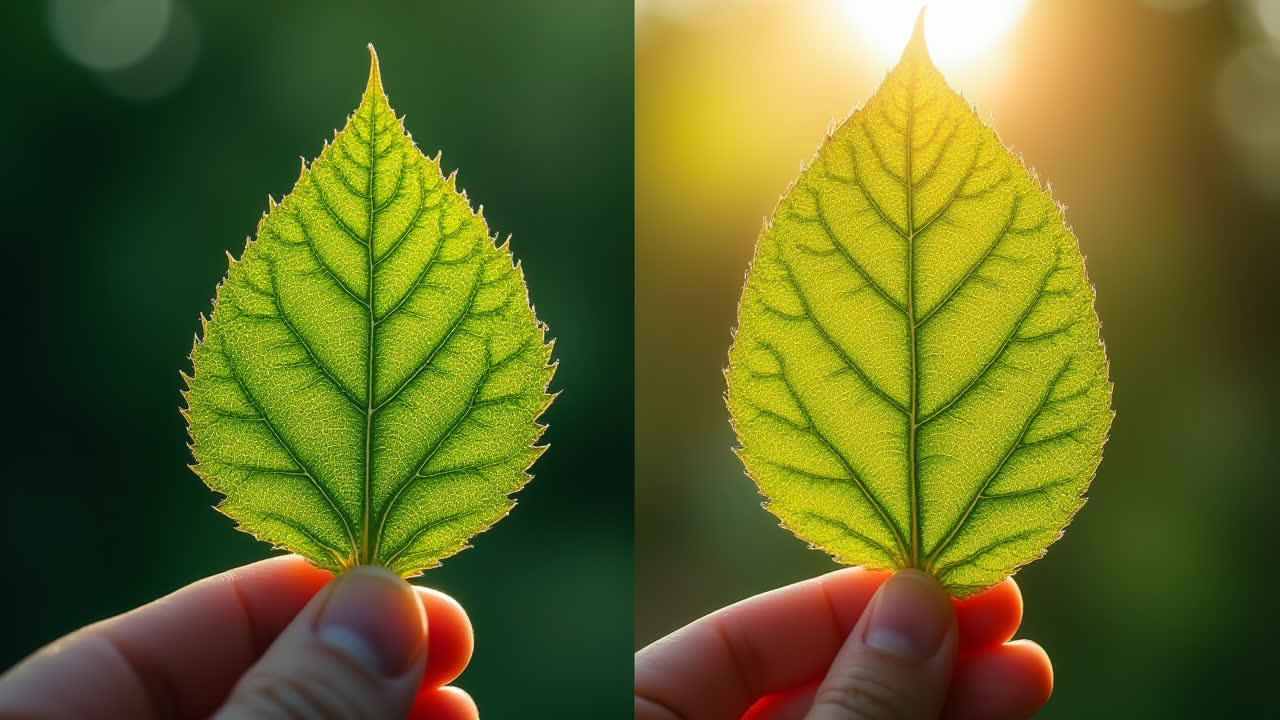
Reticulate venation creates a net-like pattern that would make any spider proud! This intricate network starts with a central vein called the midrib, which serves as the main highway. From this midrib, secondary veins branch out like tributaries of a river, extending toward the leaf margins. I always think of these patterns as nature's own version of a neural network – interconnected and complex.
What's really cool about reticulate venation is how some of these secondary veins form specialized structures called hydathodes at their tips. These tiny organs act like safety valves, releasing excess water through a process called guttation. Have you ever noticed those tiny water droplets on leaves early in the morning? That's guttation in action!
This venation pattern comes in two main varieties: pinnate reticulate (where all veins except the midrib form the network) and palmate reticulate (where multiple midribs create the pattern). You'll find reticulate venation in familiar plants like mango trees, hibiscus flowers, and most flowering trees in your neighborhood.
Understanding Parallel Venation: Nature's Clean Lines
Now, let's shift gears to parallel venation – nature's minimalist approach to leaf design. Instead of creating an intricate web, parallel venation arranges veins to run alongside each other from the leaf base to its tip. If reticulate venation is like a busy city street map, parallel venation is more like perfectly aligned railroad tracks.
This streamlined pattern predominantly appears in monocot plants (think grasses, lilies, and palms). The simplicity of parallel venation might make you think it's less efficient, but evolution rarely wastes energy on inefficient designs! This arrangement actually works beautifully for the leaf structures and growth patterns of monocots.
Like its reticulate cousin, parallel venation also has two main types: pinnate parallel (with veins arising perpendicularly from a central midvein) and palmate parallel (with multiple prominent parallel veins). You can see convergent parallel venation in grass blades and divergent parallel venation in plants like palmyra palm, where veins enter separate leaf lobes.
Key Differences Between Reticulate and Parallel Venation
| Feature | Reticulate Venation | Parallel Venation |
|---|---|---|
| Pattern | Net or web-like interconnected veins | Parallel veins running side by side |
| Plant Type | Predominantly in dicotyledons | Predominantly in monocotyledons |
| Midrib Structure | Single prominent midrib with branching | May have multiple veins or single midrib |
| Vein Branching | Extensive branching and interconnection | Minimal to no branching |
| Examples | Mango, hibiscus, rose, maple | Grass, wheat, bamboo, lilies |
| Hydathode Formation | Often present at vein terminations | Less common |
| Leaf Shape | Often broad and complex | Usually narrow and elongated |
| Evolutionary Advantage | Better distribution in broader leaves | Efficient for vertical, narrow leaves |
The contrast between these two venation patterns reflects a fascinating evolutionary strategy. While reticulate venation creates redundant pathways (think of it as having multiple routes to avoid traffic jams), parallel venation takes a more direct approach, which works perfectly for the growth patterns and morphology of monocots.
The Role of Venation in Plant Evolution
Here's something I find absolutely fascinating – venation patterns tell us a story about plant evolution. The emergence of reticulate venation coincided with the development of broader leaves, which needed more complex transport systems. Parallel venation, on the other hand, suits the simple, elongated leaf shapes common in monocots.
I remember examining a fossil leaf collection once and being amazed by how well-preserved these venation patterns were after millions of years. It's a reminder that these patterns aren't just surface details – they're fundamental to how leaves function and have remained surprisingly consistent throughout evolutionary time.
Both venation types serve the same basic functions: transporting water and nutrients, providing structural support, and helping in leaf development. However, they achieve these goals through different architectural approaches, much like how different cultures might construct buildings that serve the same purpose but look completely different.
Practical Applications of Understanding Venation
You might wonder, "Why should I care about leaf venation patterns?" Well, it's more useful than you might think! For gardeners, understanding venation can help in plant identification and selection. For educators, it's a great way to teach about plant diversity. And for nature enthusiasts like myself, it adds another layer of appreciation for the complexity and beauty of the natural world.
In my gardening adventures, I've found that knowing about venation patterns helps me understand plant care better. Plants with reticulate venation often have different watering and fertilization needs compared to those with parallel venation. Plus, it's a great conversation starter at garden parties – trust me, nothing livens up a gathering like enthusiastically pointing out leaf vein patterns!
Common Misconceptions About Venation Patterns
Let me clear up a few misconceptions I've encountered over the years. First, while reticulate venation is typical of dicots and parallel venation of monocots, there are exceptions. Some dicots have parallel venation, and vice versa. Nature loves to throw curveballs at our neat categorizations!
Another common myth is that parallel venation is somehow "simpler" or "less evolved" than reticulate venation. In reality, both patterns represent sophisticated solutions to the challenges of leaf function. Evolution rarely settles for "simple" when it comes to survival strategies.
I've also heard people assume that venation patterns determine leaf shape exclusively. While there's definitely a correlation, many factors contribute to leaf morphology, including environmental conditions, genetic factors, and the plant's overall growth strategy.
Observing Venation Patterns: A Simple Guide
Want to start identifying venation patterns yourself? Here's a quick guide based on my years of leaf-spotting. For reticulate venation, look for that web-like network radiating from a central midrib. You'll often see these patterns in broad-leaved plants like oak trees, roses, and most garden flowers. The interconnected nature of the veins creates a complex, almost artistic pattern.
For parallel venation, search for those clean, straight lines running from base to tip. Grass blades are perfect examples – next time you're at a park, take a close look at the grass underfoot. You'll see those parallel lines running the entire length of each blade. Corn leaves, banana plants, and tulips also showcase this pattern beautifully.
Pro tip: Morning light often creates the best conditions for vein observation, especially after a light rain when water droplets can enhance the vein patterns. I keep a small hand lens in my gardening kit for exactly this purpose!
FAQ Section
Can a plant have both reticulate and parallel venation in different leaves?
Yes, though it's relatively rare, some plants can display both venation patterns in different leaves, especially in plants with dimorphic leaves (leaves that change shape as the plant matures). For example, some aquatic plants have submerged leaves with parallel venation and floating leaves with reticulate venation.
Why do dicots typically have reticulate venation while monocots have parallel venation?
This difference relates to the fundamental anatomical distinctions between dicots and monocots. Dicots typically have broader leaves that benefit from the redundant pathways of reticulate venation, while monocots often have narrow, elongated leaves where parallel venation provides efficient transport without the need for complex branching.
How can venation patterns help in plant identification?
Venation patterns serve as one of many diagnostic features in plant identification. Along with leaf shape, arrangement, and margin characteristics, venation patterns can help narrow down plant families and sometimes even genera. For instance, palmate venation with 5-7 main veins often indicates maple family plants, while pinnate parallel venation in long, narrow leaves suggests grasses or related monocots.
Final Thoughts on Nature's Leaf Designs
As I wrap up this exploration of leaf venation patterns, I can't help but marvel at how these seemingly simple structures reveal so much about plant evolution and adaptation. Whether it's the intricate web of reticulate venation or the elegant simplicity of parallel veins, each pattern represents millions of years of evolutionary refinement.
Next time you're out in nature – whether in your garden, a park, or just walking down the street – take a moment to examine the leaves around you. Look for those distinctive patterns, and you'll start seeing the plant world through new eyes. Understanding venation isn't just academic knowledge; it's a gateway to deeper appreciation of the botanical world that surrounds us every day.
Remember, every leaf tells a story through its veins, and now you know how to read a few chapters of that story. Happy leaf-spotting, and may your botanical adventures be filled with fascinating venation discoveries!