Maglev vs Bullet Train: Complete Comparison Guide (2026)
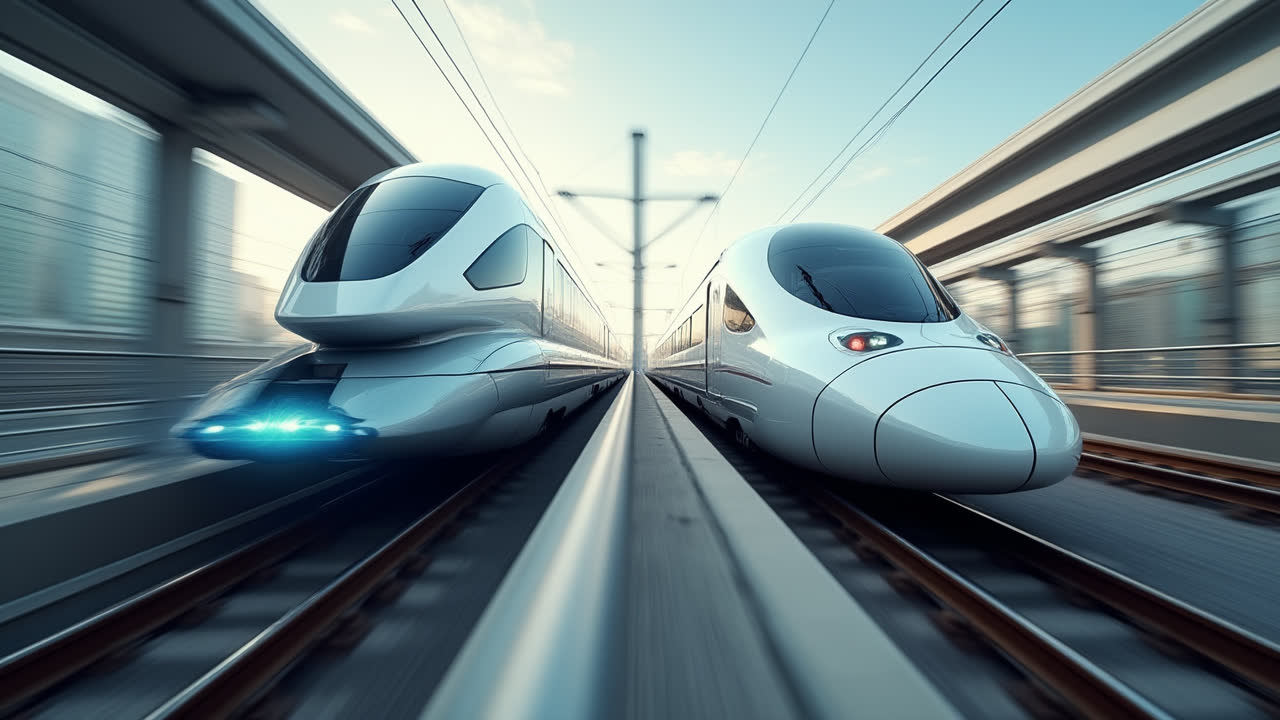
Understanding High-Speed Rail Technologies
Time is increasingly valuable in our modern lives, and transportation efficiency has become a critical factor in how we navigate our world. Rail transport stands out as one of the most effective, comfortable, and timely solutions, especially in developed nations like Japan, Korea, Britain, France, and Spain. Unlike other transportation modes, trains offer superior manageability through computerized control systems while providing exceptional energy efficiency and requiring minimal maintenance.
When we talk about high-speed trains, two terms often come up: Maglev trains and Bullet trains. Though sometimes used interchangeably, these technologies represent different approaches to achieving high-speed rail travel. Have you ever wondered why some trains seem to glide effortlessly while others still rely on traditional wheels? The answer lies in their fundamental design differences.
High-speed rail systems typically operate at speeds exceeding 200 km/h, significantly reducing travel time between major cities. These systems have transformed intercity travel in many regions, offering a compelling alternative to both driving and flying for medium-distance journeys. I've personally experienced the convenience of stepping onto a train in downtown Tokyo and arriving in Osaka just over two hours later—a journey that would take nearly six hours by car.
What is a Maglev Train?
Magnetic levitation (Maglev) trains represent the cutting edge of rail technology. Unlike conventional trains, Maglev trains don't use wheels or traditional tracks. Instead, they employ powerful magnetic forces to levitate, guide, and propel the train forward. This remarkable technology eliminates physical contact between the train and its guideway, virtually eliminating friction. The first time I saw a Maglev train in Shanghai, it seemed almost magical—the train literally floating above the track!
Maglev technology operates on two main principles: electrodynamic suspension (EDS) and electromagnetic suspension (EMS). In EDS systems, superconducting magnets create powerful magnetic fields that allow the train to float above the guideway. The changing magnetic fields in the guideway not only support the train but also propel it forward at tremendous speeds. EMS systems, in contrast, use the attractive force of electromagnets to pull the train up toward the guideway, maintaining a small but consistent gap.
The most significant advantage of Maglev technology is the near elimination of friction, which allows these trains to achieve extraordinary speeds with remarkable energy efficiency. Without the physical wear and tear experienced by conventional trains, Maglev systems also require less maintenance over time. Currently, commercial Maglev trains operate in countries like Japan and China, with Japan's L0 Series Maglev having reached test speeds of over 600 km/h. Sometimes I wonder if we're witnessing the early stages of a complete transportation revolution!
What is a Bullet Train?
The term "Bullet train" originated in Japan as a nickname for the Shinkansen high-speed rail network, which began operation in 1964. These trains earned their name from their sleek, aerodynamic design resembling a bullet. Today, the term broadly refers to conventional high-speed trains that operate on wheels and specialized tracks. While not as technologically advanced as Maglev systems, conventional Bullet trains have proven remarkably successful worldwide.
Bullet trains typically operate on dedicated tracks designed to minimize curves and maximize straight sections, allowing for higher speeds. The front cars feature distinctive aerodynamic designs that reduce air resistance, enabling speeds of 200-350 km/h in regular service. Most Bullet train systems use electric power, drawing electricity from overhead lines to power their motors. The stability and safety of these systems are impressive—Japan's Shinkansen has operated for over 50 years without a single fatal accident due to derailment or collision.
What makes Bullet trains particularly appealing is their practical balance of speed, capacity, and cost. They can carry hundreds of passengers at high speeds while operating on modified conventional rail infrastructure. This practicality has led to widespread adoption across Europe and Asia. During my travels through Europe, I've been impressed by how these trains connect major cities with remarkable punctuality. It's worth noting that some modern Maglev systems are also considered part of the Bullet train family, creating some terminology overlap that occasionally confuses transportation discussions.
Key Differences Between Maglev and Bullet Trains
Understanding the distinctions between these two high-speed rail technologies helps clarify their respective advantages and limitations. The fundamental difference lies in how they interact with their tracks: Maglev trains float above their guideways using magnetic forces, while conventional Bullet trains maintain physical contact with rails through wheels. This creates cascading differences in nearly every aspect of their operation.
| Feature | Maglev Trains | Conventional Bullet Trains |
|---|---|---|
| Track Contact | No physical contact (levitates) | Wheels on rails |
| Maximum Speed | 600+ km/h (test conditions) | 300-350 km/h (commercial operation) |
| Noise Level | Minimal (no wheel-rail friction) | Moderate to high (especially at top speeds) |
| Energy Efficiency | Extremely high (minimal friction losses) | Good, but with friction-related energy losses |
| Infrastructure Cost | Very high (specialized guideways required) | High, but less than Maglev systems |
| Maintenance Requirements | Lower (no wheel/rail wear) | Higher (regular wheel and track maintenance) |
| Global Adoption | Limited (China, Japan, South Korea) | Widespread (Japan, China, Europe, etc.) |
| Passenger Comfort | Excellent (smoother ride, less vibration) | Very good (some vibration at high speeds) |
The Future of High-Speed Rail
The evolution of high-speed rail continues at an impressive pace. Maglev technology, while currently limited to a few operational lines, shows tremendous promise for future transportation networks. The Shanghai Maglev and Japan's experimental Chuo Shinkansen line demonstrate the potential for ultra-high-speed ground transportation that could eventually compete with short-haul flights. Meanwhile, conventional Bullet train networks continue to expand across Europe, Asia, and potentially North America.
Several emerging trends are shaping the future of high-speed rail. Environmental considerations increasingly favor rail travel over air travel for certain distances due to lower carbon emissions. Technological improvements continue to enhance both Maglev and conventional systems, with developments in superconductivity potentially making Maglev systems more economically viable. Integration with urban transportation networks is also improving, creating seamless travel experiences from city centers.
The economic barriers to Maglev adoption remain significant, however. The extremely high initial infrastructure costs have limited widespread implementation, despite the long-term operational advantages. Conventional Bullet train systems, with their lower implementation costs and compatibility with existing rail networks, continue to represent the more practical choice for most countries. That said, I believe the gap between these technologies may narrow as Maglev construction techniques improve and economies of scale develop.
Frequently Asked Questions
Why aren't Maglev trains more widely used despite their superior speed?
The limited adoption of Maglev trains primarily comes down to their extremely high infrastructure costs. Building dedicated Maglev guideways requires massive initial investments that many countries find difficult to justify. Additionally, Maglev systems cannot use existing rail infrastructure, meaning entire new networks must be constructed from scratch. Conventional Bullet trains, while slower, can often utilize modified existing rail corridors, making their implementation more economically feasible for most countries. As construction techniques improve and more countries gain experience with Maglev technology, we may see wider adoption in the coming decades.
How do Maglev trains work without touching the track?
Maglev trains operate using powerful magnetic forces for levitation, guidance, and propulsion. In electrodynamic suspension (EDS) systems, superconducting magnets on the train create a magnetic field that interacts with coils in the guideway, producing repulsive forces that lift the train. Alternatively, electromagnetic suspension (EMS) systems use electromagnets that are attracted upward toward the guideway. The train's forward motion comes from changing magnetic fields in the guideway that pull and push the train along, similar to how electric motors work. This complete elimination of physical contact removes friction, enabling extremely high speeds and a smoother ride.
Are high-speed trains safer than other transportation modes?
High-speed rail systems generally maintain exceptional safety records compared to other transportation modes. Japan's Shinkansen network, for example, has operated since 1964 without a single passenger fatality due to derailment or collision. The dedicated tracks, advanced signaling systems, and automated controls used in high-speed rail significantly reduce accident risks. Maglev trains offer additional safety advantages due to their wraparound guideway design that makes derailment nearly impossible. When comparing fatalities per passenger-kilometer, high-speed rail consistently ranks as one of the safest transportation options available, typically surpassing both air and automobile travel in safety statistics.
Conclusion
Both Maglev and conventional Bullet trains represent remarkable achievements in transportation technology, each with distinct advantages and limitations. Maglev trains offer unparalleled speed, efficiency, and passenger comfort through their revolutionary friction-free design. Conventional Bullet trains, while not as technologically advanced, provide practical, proven high-speed transportation that has transformed intercity travel across multiple continents.
The choice between these technologies ultimately depends on specific regional needs, economic factors, and long-term transportation goals. As technology advances and environmental considerations increasingly influence transportation planning, both systems will likely continue to evolve and expand their global presence. Whether floating on magnetic fields or racing on wheels, high-speed rail represents one of humanity's most impressive engineering achievements—one that continues to shrink distances and connect communities in our increasingly interconnected world.