Moth vs Butterfly: 8 Key Differences to Identify These Winged Insects
Understanding Lepidoptera: The Order of Scaled Wings
Moths and butterflies both belong to the insect order Lepidoptera, a name derived from Greek words meaning "scale" and "wing." This fascinating order is characterized by the presence of tiny scales covering their wings and a coiled proboscis (a tube-like mouthpart used for feeding). With approximately 160,000 species worldwide, Lepidoptera represents one of the most diverse insect orders on our planet.
The most common misconception is that butterflies are simply colorful moths, but this isn't quite accurate. While color can sometimes provide clues—with butterflies typically being more vibrant than their moth cousins—there are numerous exceptions to this rule. For instance, the Polyphemus moth displays more striking colors than the relatively plain Summer Azure butterfly. I've often found myself mistaking colorful moths for butterflies during my evening garden observations!
Both insects undergo complete metamorphosis with four distinct life stages: egg, larva (caterpillar), pupa (chrysalis or cocoon), and adult. Despite these similarities, nature has equipped these insects with several distinguishing features that help us tell them apart. Isn't it fascinating how evolution has created such specialized variations within the same order?
The Definitive Difference: Antennae Structure
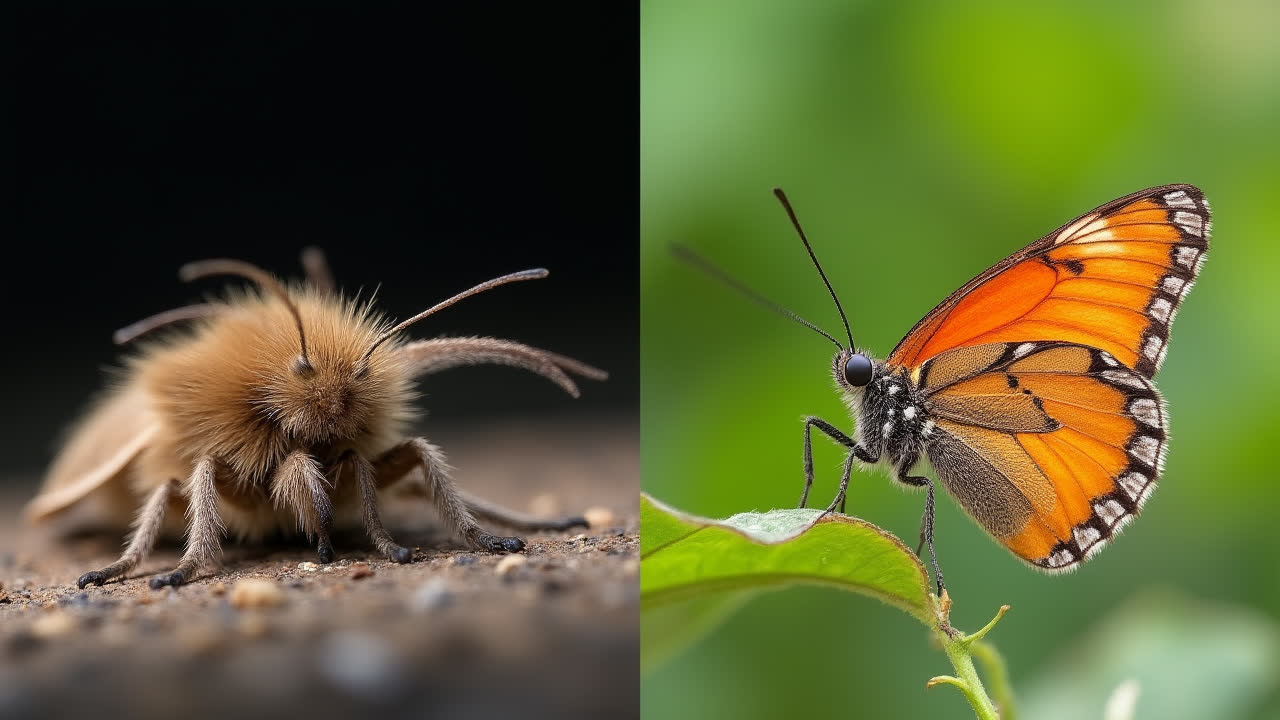
If you want to know the single most reliable way to distinguish between these winged insects, look at their antennae. This is truly the definitive characteristic that separates the two groups. Butterfly antennae feature distinctive club-shaped tips, almost like they're wearing little boxing gloves at the end of each antenna. These club-shaped ends are consistently present across all butterfly species, making this trait the gold standard for identification.
Moths, on the other hand, have entirely different antennae structures. Their antennae are typically straight, and depending on the species, they might be feathery, saw-edged, or comb-like in appearance. Male moths often have particularly elaborate antennae that help them detect female pheromones from remarkable distances—sometimes up to seven miles away! I've observed this dramatic difference firsthand when comparing specimens in my butterfly garden.
While using a magnifying glass can help you see these details more clearly, the antennae difference is often visible to the naked eye with a bit of practice. Next time you encounter a Lepidopteran visitor, take a moment to observe its antennae—you'll be surprised how quickly this becomes second nature in your identification process.
Activity Patterns: Day Flyers vs. Night Flyers
When do you typically spot these winged creatures? The timing offers another helpful clue to their identity. Most butterflies are diurnal creatures, meaning they're active during daylight hours. They rely on the sun's warmth to fly effectively, as their body temperature needs to reach about 86°F (30°C) before they can take off properly. That's why you'll often see butterflies basking with open wings on sunny mornings—they're literally warming up their flight muscles!
In contrast, the vast majority of moths are nocturnal, preferring to fly during evening and nighttime hours. Their eyes are specially adapted for low-light conditions, and many species navigate using the moon as a reference point. Unfortunately, this natural navigation system explains why moths are often confused by artificial light sources, circling porch lights or street lamps in seemingly endless loops.
There are exceptions to these patterns, of course. Some moth species, like the colorful day-flying hummingbird hawk-moth, are active during daylight. Similarly, certain butterfly species prefer the twilight hours. I remember being quite surprised when I first encountered a day-flying moth in my garden—it challenged all my preconceptions! However, as a general rule, the time of day when you spot these insects can provide valuable identification clues.
Body Differences: Size, Shape, and Texture
Beyond antennae and activity patterns, the physical structure of these insects offers additional identification clues. Butterflies typically have slender, smooth bodies with a clearly defined three-part structure: head, thorax, and abdomen. Their bodies often appear delicate and streamlined, complementing their graceful flight patterns. Most butterfly species hold their wings vertically above their bodies when at rest, creating that classic "praying" posture we associate with these insects.
Moths generally have stouter, furrier bodies that appear more robust than their butterfly counterparts. This extra bulk serves a purpose—it helps moths retain heat during cool evening hours when they're most active. Their bodies often have a shaggier appearance due to specialized scales that resemble fur or hair. These scales provide additional insulation and sometimes serve as camouflage. When resting, most moths hold their wings horizontally, flat against their bodies or in a tent-like formation over their abdomen.
Another subtle but interesting difference involves a specialized anatomical feature called the frenulum. This small coupling mechanism connects the forewings and hindwings during flight, helping moths maintain aerodynamic efficiency. Butterflies lack this structure entirely, having evolved different wing-coordination mechanisms. Though this detail requires close observation to spot, it represents another fascinating evolutionary divergence between these related insect groups.
Comparing Moths and Butterflies: Comprehensive Differences
| Feature | Butterflies | Moths |
|---|---|---|
| Antennae | Club-shaped tips | Straight, feathery or comb-like |
| Activity Time | Mostly diurnal (day active) | Mostly nocturnal (night active) |
| Body Structure | Slender, smooth, less hairy | Stout, furry, robust |
| Wing Position at Rest | Vertical (upright) over body | Horizontal (flat) or tent-like |
| Wing Color | Typically bright and colorful | Usually dull, brown, or gray |
| Frenulum (Wing Coupler) | Absent | Present |
| Pupal Stage | Chrysalis (hard, exposed) | Cocoon (silky covering) |
| Species Diversity | ~18,500 species | ~140,000 species |
Evolutionary Significance and Ecological Roles
The evolution of moths and butterflies represents a fascinating chapter in natural history. Moths evolved first, with fossil records dating back approximately 190 million years. Butterflies are relative newcomers, appearing around 56 million years ago as specialized offshoots of moths. This evolutionary timeline explains why there are so many more moth species than butterfly species—moths have simply had much more time to diversify and adapt to various ecological niches.
Both insects play crucial ecological roles. As caterpillars, they're important herbivores that help regulate plant populations and provide food for countless predators. As adults, many species serve as pollinators, though they're often overlooked compared to bees and other daytime pollinators. Moths, in particular, are vital night pollinators for many plant species that bloom after dark. Some plants have evolved specifically to attract moth pollinators with pale colors and strong nighttime fragrances.
These insects also serve as important indicators of environmental health. Their sensitivity to habitat changes, chemical pollutants, and climate fluctuations makes them valuable "canaries in the coal mine" for ecosystem monitoring. The decline of certain moth and butterfly populations often signals broader environmental issues that may eventually affect other species—including humans. I've noticed the changing butterfly populations in my own region over the years, which reflects larger environmental shifts occurring around us.
Frequently Asked Questions About Moths and Butterflies
Are all moths dull-colored and all butterflies colorful?
No, this is a common misconception. While many butterflies are indeed colorful and many moths have subdued coloration, there are plenty of exceptions. Some moth species, like the Luna moth, Atlas moth, and Rosy Maple moth, display vibrant colors and striking patterns. Conversely, some butterfly species feature muted browns and grays. The most reliable way to distinguish between moths and butterflies is by examining their antennae structure rather than coloration.
Do moths and butterflies live for the same amount of time?
Lifespan varies significantly among species in both groups. Most adult butterflies live for 2-4 weeks, though some species like Monarchs can live for up to 9 months. Moths show even greater variation, with some adults living just a few days while others survive for several months. Interestingly, some adult moths, like the Luna moth, don't have functional mouthparts and don't feed at all—they live solely off energy reserves stored during their caterpillar stage, focusing exclusively on reproduction during their brief adult lives.
Are butterflies and moths equally important as pollinators?
Both groups contribute to pollination, but they often serve different ecological niches. Butterflies are active daytime pollinators, visiting flowers that bloom during daylight hours. Moths, particularly hawk moths and other long-tongued species, are crucial night pollinators for many plants that open their flowers in the evening. Recent research suggests that moths may be more important pollinators than previously recognized, especially in urban and agricultural environments where daytime pollinators face increasing pressures. Some plant species, like evening primrose and night-blooming jasmine, rely heavily or exclusively on moth pollinators.
Conclusion: Appreciating Lepidopteran Diversity
Understanding the differences between moths and butterflies enhances our appreciation for the incredible diversity within the Lepidoptera order. While the club-tipped antennae of butterflies and the straight or feathery antennae of moths provide the most reliable identification method, other characteristics like body structure, resting posture, and activity patterns offer additional clues.
Both these insect groups have adapted to fill unique ecological niches, evolving specialized features that help them thrive in their respective environments. Whether it's a colorful butterfly dancing from flower to flower in the midday sun or a moth silently pollinating night-blooming plants, these insects deserve our attention and conservation efforts.
Next time you encounter a scaled-wing visitor in your garden or on an evening walk, take a moment to observe its features. Is it a butterfly with club-tipped antennae resting with upright wings, or a moth with feathery antennae holding its wings flat? Either way, you're witnessing one small representative of an ancient and remarkably successful insect order that continues to enchant naturalists and casual observers alike.