Nucleotide vs Nucleoside: Essential Differences Explained (Complete Guide)
The Basics: What Are Nucleotides and Nucleosides?
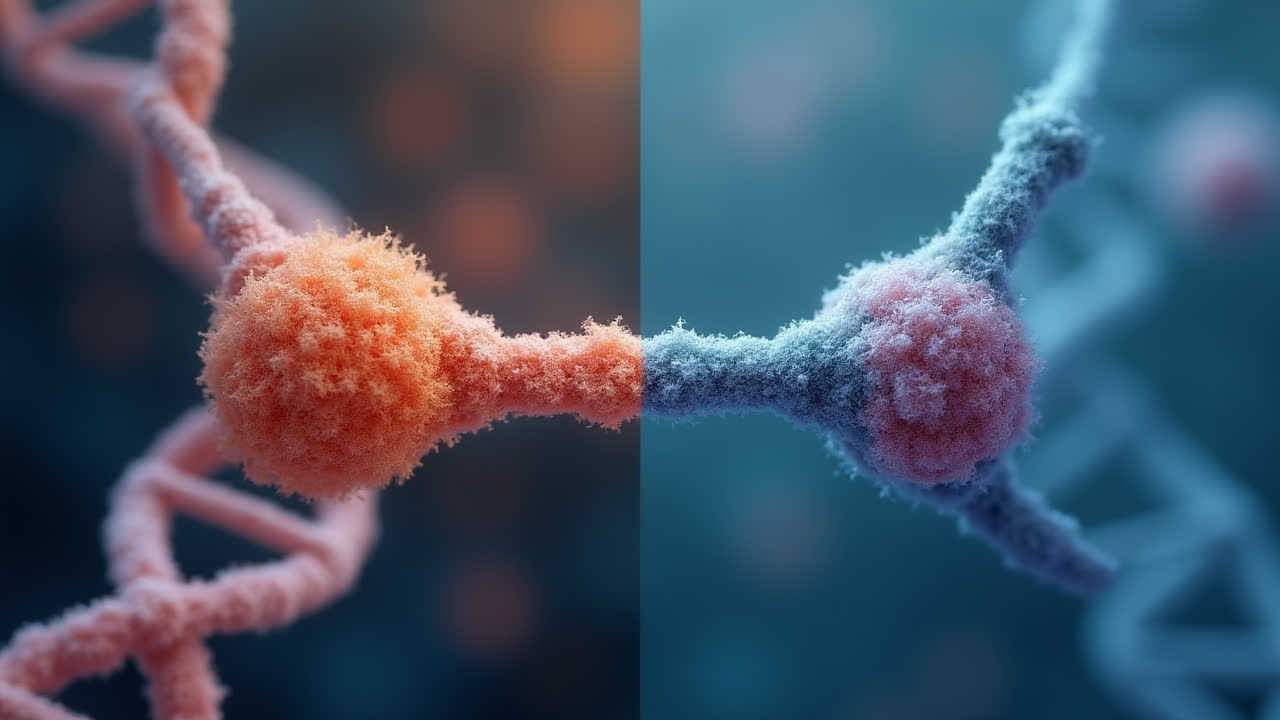
Before diving into the differences, let's establish what these molecules actually are. Nucleotides and nucleosides are the building blocks that form the foundation of nucleic acids like DNA (deoxyribonucleic acid) and RNA (ribonucleic acid). Though they sound similar and are closely related, they have distinct structural differences that give them unique properties and functions.
I remember when I first learned about these molecules in my biochemistry class – the professor drew their structures on the board, and it suddenly clicked how these tiny components could build something as complex as the human genome. That moment of clarity is what I hope to share with you through this article.
Both nucleotides and nucleosides contain nitrogenous bases – the letters of the genetic alphabet that encode our biological instructions. These bases fall into two categories: purines (adenine and guanine) and pyrimidines (cytosine, uracil, and thymine). While this might sound technical, understanding these basics will help you grasp how life's instructions are stored and transmitted at the molecular level.
Nucleotide Structure and Composition
A nucleotide is composed of three essential components that work together to form its complete structure. These components include:
- A nitrogenous base (adenine, guanine, cytosine, thymine, or uracil)
- A five-carbon sugar (pentose) – either ribose or deoxyribose
- One to three phosphate groups attached to the 5' carbon of the sugar
Think of nucleotides as the complete package – they have everything needed to form the structural backbone of DNA and RNA. The phosphate groups are particularly important as they create the phosphodiester bonds that link nucleotides together in a chain, forming the familiar "backbone" of DNA's double helix structure.
When we look at examples of nucleotides, we typically refer to them based on their nitrogenous base and the number of phosphate groups they contain. For instance, ATP (adenosine triphosphate), the primary energy currency in cells, is a nucleotide containing the base adenine and three phosphate groups. Isn't it amazing that the same molecular structures that store genetic information also power our cellular processes?
In DNA specifically, nucleotides are arranged in a specific sequence that determines the genetic code. The bases pair in a particular way – adenine with thymine and guanine with cytosine – creating the complementary strands of the double helix. This complementary pairing is crucial for DNA replication and the transmission of genetic information.
Nucleoside Structure and Composition
A nucleoside, by comparison, is simpler in structure. It consists of:
- A nitrogenous base (the same ones found in nucleotides)
- A five-carbon sugar (pentose) – either ribose or deoxyribose
The key distinction? Nucleosides lack the phosphate group that nucleotides possess. You can actually think of a nucleoside as a "precursor" to a nucleotide – add a phosphate group to a nucleoside, and you've created a nucleotide! The nitrogenous base in a nucleoside is attached to the sugar molecule through a beta-glycosidic bond at the 3' position of the pentose sugar.
Common examples of nucleosides include adenosine, guanosine, cytidine, thymidine, and uridine. These are named according to their nitrogenous base components. For instance, adenosine contains the base adenine attached to a ribose sugar.
Nucleosides play important roles beyond just serving as precursors to nucleotides. They're involved in various biological processes and can even have medical applications. For example, some nucleoside analogs are used as antiviral and anticancer agents because they can interfere with nucleic acid synthesis in viruses or cancer cells.
Have you ever taken certain antiviral medications? Some of them, like acyclovir used to treat herpes infections, are actually nucleoside analogs that disrupt viral replication. The molecular mechanisms behind these medications stem directly from our understanding of nucleoside structure and function.
Key Differences Between Nucleotides and Nucleosides
| Characteristic | Nucleotide | Nucleoside |
|---|---|---|
| Chemical Composition | Nitrogenous base + Sugar + Phosphate group | Nitrogenous base + Sugar |
| Phosphate Group | Contains 1-3 phosphate groups | No phosphate group |
| Role in Nucleic Acids | Direct building blocks of DNA and RNA | Precursor to nucleotides |
| Examples | ATP, GTP, CTP, TTP, AMP, dAMP | Adenosine, Guanosine, Cytidine, Thymidine, Uridine |
| Energy Role | Can serve as energy carriers (e.g., ATP) | Not directly involved in energy transfer |
| Signal Transduction | Involved in cellular signaling (e.g., cAMP) | Limited role in signal transduction |
| Medical Applications | Used in DNA sequencing, gene regulation | Used as antiviral and anticancer agents |
| Formation Process | Formed by phosphorylation of nucleosides | Formed by glycosylation between a base and sugar |
As the table illustrates, while nucleotides and nucleosides share structural similarities, their differences give them distinct roles in biological systems. The presence of a phosphate group in nucleotides enables them to form the backbone of DNA and RNA, as well as participate in energy transfer reactions that are essential for cellular processes.
Functional Roles in Biological Systems
The structural differences between nucleotides and nucleosides translate into distinct functional roles within biological systems. Let's explore some of these key functions:
Nucleotide Functions
Nucleotides serve multiple critical functions in cells beyond just being building blocks for DNA and RNA. One of their most remarkable roles is as energy carriers. ATP (adenosine triphosphate), for example, is often called the "energy currency" of the cell because it stores and transfers energy for cellular processes. When you lift a finger or blink an eye, it's ATP that provides the energy for those muscle contractions.
Similarly, GTP (guanosine triphosphate) serves as the energy source for protein synthesis – the process by which your cells create the proteins necessary for virtually every function in your body. Without nucleotides, your cells would essentially run out of fuel!
Nucleotides also play crucial roles in cell signaling. Cyclic AMP (cAMP), a modified nucleotide, functions as a secondary messenger in many biological processes, helping to relay signals from hormones and other extracellular signaling molecules to target molecules inside the cell. This signaling is vital for coordinating cellular activities and responding to environmental changes.
In DNA sequencing technologies, modified nucleotides called dideoxynucleotides are used to determine the exact sequence of bases in a DNA molecule – a technique that has revolutionized genetics and personalized medicine. Isn't it fascinating that understanding the structure of nucleotides has enabled us to read the genetic blueprint of life itself?
Nucleoside Functions
While nucleosides might seem less complex than nucleotides, they have important functions of their own. Their most obvious role is serving as precursors to nucleotides – they're essentially the starting material that, when phosphorylated, becomes the building blocks of nucleic acids.
In medicine, nucleoside analogs have proven incredibly valuable as therapeutic agents. These compounds can mimic natural nucleosides but contain structural modifications that allow them to interfere with viral replication or cancer cell division. Some well-known antiviral drugs like acyclovir (for herpes), ribavirin (for hepatitis C), and zidovudine (for HIV) are nucleoside analogs that have saved countless lives.
Interestingly, dietary nucleosides may also have health benefits. Some research suggests that a diet rich in nucleosides from sources like breast milk or certain foods may support optimal immune function and intestinal development, especially in infants. This is an area where ongoing research continues to reveal new insights.
The Role in DNA and RNA Formation
The formation of DNA and RNA – the genetic material that carries the instructions for development, functioning, growth, and reproduction in all known organisms – depends critically on nucleotides, with nucleosides serving as important precursors.
When nucleotides join together to form DNA or RNA, they create a polymer through a process called polymerization. This process involves the formation of phosphodiester bonds between the 5' phosphate group of one nucleotide and the 3' hydroxyl group of another nucleotide. The resulting chain of nucleotides forms the backbone of the nucleic acid, with the nitrogenous bases extending from this backbone.
In DNA, the nucleotides contain the bases adenine (A), guanine (G), cytosine (C), and thymine (T), along with deoxyribose sugar. The famous double helix structure of DNA forms when two nucleotide chains run in opposite directions (antiparallel) and are held together by hydrogen bonds between complementary base pairs: A pairs with T, and G pairs with C.
RNA, on the other hand, is typically single-stranded and contains ribose sugar instead of deoxyribose. It also uses the base uracil (U) instead of thymine. These differences give RNA distinct properties that allow it to perform its various roles in protein synthesis and other cellular processes.
One thing I find particularly remarkable is how these simple molecular building blocks – nucleotides – can store the vast amount of information needed to build and maintain a complex organism. The human genome contains approximately 3 billion base pairs, all encoded by these fundamental units. It's a testament to the elegance and efficiency of biological systems!
Frequently Asked Questions About Nucleotides and Nucleosides
What happens when a phosphate group is added to a nucleoside?
When a phosphate group is added to a nucleoside, it becomes a nucleotide. This process, called phosphorylation, typically occurs at the 5' carbon of the sugar component of the nucleoside. The addition of a phosphate group is a crucial step in the synthesis of nucleic acids, as nucleotides (not nucleosides) are the actual building blocks of DNA and RNA. Phosphorylation also enables nucleotides to participate in energy transfer reactions, with ATP being the most well-known example of an energy-carrying nucleotide. Depending on the number of phosphate groups added, we can have nucleoside monophosphates (one phosphate), diphosphates (two phosphates), or triphosphates (three phosphates).
Why are nucleotide analogs used in medicine?
Nucleotide and nucleoside analogs are used in medicine because they can mimic natural nucleic acid building blocks but contain structural modifications that interfere with DNA or RNA synthesis. This makes them valuable as antiviral and anticancer agents. For example, many antiviral drugs work by being incorporated into viral DNA or RNA during replication, causing chain termination or mutations that prevent the production of functional viral particles. Similarly, some anticancer drugs target rapidly dividing cancer cells by interfering with DNA replication. Examples include acyclovir for herpes infections, ribavirin for hepatitis C, zidovudine for HIV, and gemcitabine for various cancers. These therapeutic applications highlight the importance of understanding nucleotide and nucleoside structure and function for medical science.
How do nucleotides contribute to cellular energy processes?
Nucleotides play a crucial role in cellular energy processes, with ATP (adenosine triphosphate) being the primary energy carrier in cells. The energy in ATP is stored in the high-energy phosphate bonds. When these bonds are broken during ATP hydrolysis, energy is released that can power various cellular activities, from muscle contraction to active transport across cell membranes. Other nucleotides like GTP also participate in energy transfer, particularly in protein synthesis. Additionally, nucleotides like NAD+ and FAD serve as electron carriers in metabolic pathways such as cellular respiration, where they help convert the energy from food into ATP. The versatility of nucleotides allows them to function both as genetic building blocks and as key players in energy metabolism, demonstrating their fundamental importance to life.
Conclusion: Understanding the Building Blocks of Life
The distinction between nucleotides and nucleosides might seem like a minor detail in the vast complexity of molecular biology, but these differences are fundamental to understanding how genetic information is stored, transmitted, and expressed in living organisms.
To recap, nucleosides are composed of a nitrogenous base attached to a sugar molecule, while nucleotides contain a nitrogenous base, a sugar, and one to three phosphate groups. This structural difference gives nucleotides the ability to form the backbone of DNA and RNA, serve as energy carriers, and participate in various signaling pathways.
The next time you read about advances in genetics, personalized medicine, or even antiviral therapies, you'll have a deeper appreciation for the molecular foundations that make these developments possible. It's truly remarkable how these relatively simple molecular building blocks – nucleotides and nucleosides – form the basis of the genetic code that defines all life on Earth.
Whether you're a student, a science enthusiast, or simply curious about the molecular world within us, understanding these fundamental components provides a window into the elegant complexity of biological systems. So the next time someone asks you about the difference between a nucleotide and a nucleoside, you'll be ready with the answer!