Parse Tree vs Syntax Tree: Complete Comparison Guide
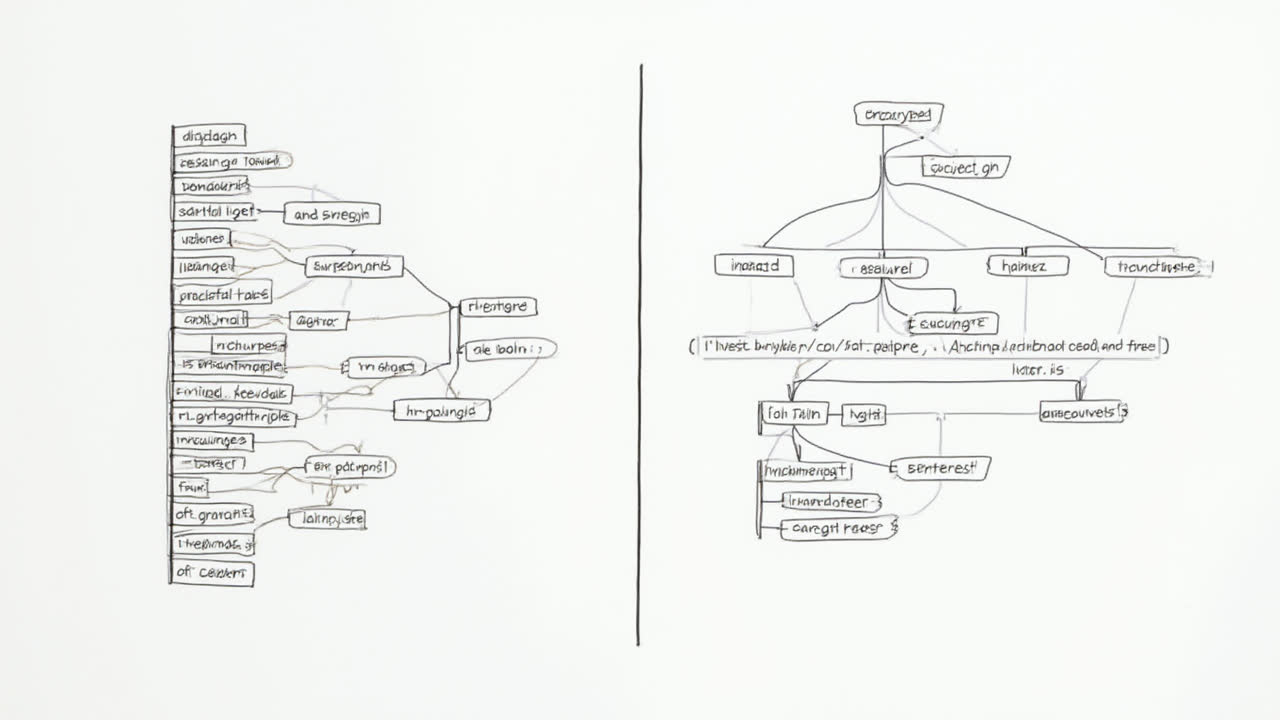
In the world of compiler design and programming language theory, parse trees and syntax trees play crucial roles in understanding and processing programming languages. Though these terms might sound similar to beginners, they represent distinct concepts with unique functions. Have you ever wondered why both these tree structures exist, and what makes them different? I've spent years working with these concepts, and I'm excited to break down these differences for you in plain English.
When I first started learning compiler design, I found myself confused about the distinction between these two tree structures. They seemed to represent the same thing – the structure of code – but as I dug deeper, I realized they serve different purposes in the compilation process. This article aims to clarify these differences and provide you with a comprehensive understanding of parse trees and syntax trees.
At their core, hierarchical structures like parse trees and syntax trees help us understand how programming languages work behind the scenes. They form the backbone of compilers and interpreters that translate human-readable code into machine instructions. Let's explore what makes each unique and how they fit into the bigger picture of language processing.
What Is a Parse Tree?
A parse tree, also known as a concrete syntax tree or derivation tree, represents the syntactic structure of a string according to a context-free grammar. It's essentially a visual representation of how a particular input string can be derived from the grammar rules of a language. In my experience working with various programming languages, I've found parse trees particularly useful for understanding exactly how a piece of code conforms to the language's syntax rules.
Parse trees capture every single detail of the input, including all tokens, punctuation marks, and structural elements like parentheses or semicolons. Think of it as a blow-by-blow account of how a compiler would break down your code according to the grammar rules. Nothing is abstracted away – every single element from your code appears somewhere in the parse tree.
The structure of a parse tree follows directly from the production rules of the grammar. Each internal node represents a non-terminal symbol (a grammar rule), while each leaf node represents a terminal symbol (an actual token from the input). The parse tree shows exactly which grammar rules were applied and in what order to derive the input string.
Parse trees are commonly used in the initial stages of compilation, specifically during the parsing phase where the compiler tries to determine if the input program follows the syntactic rules of the programming language. They're also useful in natural language processing to analyze the grammatical structure of sentences. However, they tend to be quite verbose and contain many nodes that aren't particularly useful for later stages of compilation, which is where syntax trees come in.
What Is a Syntax Tree?
A syntax tree, more commonly referred to as an Abstract Syntax Tree (AST), represents the abstract syntactic structure of source code in a programming language. Unlike parse trees, syntax trees focus on the meaningful parts of the code rather than every single token or punctuation mark. When I'm designing compilers or code analysis tools, I typically work with ASTs because they provide a more concise and useful representation of the code's structure.
Syntax trees abstract away many of the details found in parse trees, such as parentheses, semicolons, and other syntactic markers that don't affect the meaning of the code. Instead, they focus on the structural and semantic relationships between different parts of the code. Each node in a syntax tree represents a meaningful construct in the source code, such as a function definition, a variable declaration, or a control flow statement.
The primary purpose of syntax trees is to provide a representation of the code that's easier to work with during the later stages of compilation, such as semantic analysis, optimization, and code generation. They're also extensively used in program analysis tools, integrated development environments (IDEs), and code refactoring tools.
I remember working on a code refactoring tool where we needed to analyze JavaScript code to identify patterns that could be optimized. Using the full parse tree would have been overwhelming with all its extra nodes for parentheses and semicolons. The abstract syntax tree gave us just the information we needed – the actual structure and relationships of the code elements – making our analysis much more efficient.
Comparing Parse Trees and Syntax Trees
| Comparison Aspect | Parse Tree | Syntax Tree |
|---|---|---|
| Also Known As | Concrete Syntax Tree, Derivation Tree | Abstract Syntax Tree (AST) |
| Primary Purpose | Represents the exact derivation of input according to grammar rules | Represents the abstract structure for further processing |
| Level of Detail | Contains all details including punctuation and tokens | Abstracts away unnecessary details, focuses on structure |
| Size and Complexity | Larger with more nodes | Smaller and more concise |
| Stage of Use in Compilation | Early parsing stage | Later stages (semantic analysis, optimization, code generation) |
| Representation of Grammar Rules | Explicitly shows all grammar rule applications | Focuses on meaningful constructs rather than grammar rules |
| Practical Applications | Grammar validation, syntax error detection | Code analysis, optimization, refactoring, code generation |
| Memory Efficiency | Less memory efficient due to size | More memory efficient |
Key Functional Differences
The fundamental difference between parse trees and syntax trees lies in their functionality and purpose within language processing systems. Parse trees serve as a record of how grammar rules are applied to match input text, while syntax trees record the syntax of the programming language in a more abstract, streamlined form.
In practical terms, here's how these differences play out:
- Representation of Tokens: Parse trees represent every token and grammar rule application, while syntax trees focus on meaningful programming constructs.
- Information Content: Parse trees contain complete information about the input string's derivation, whereas syntax trees contain only the information needed for further processing.
- Relationship to Grammar: Parse trees directly reflect the grammar's production rules, while syntax trees abstract away from the specific grammar used.
- Efficiency for Processing: Syntax trees are more efficient for later compiler phases because they eliminate redundant information.
- Handling Ambiguity: Multiple parse trees may exist for ambiguous grammars (forming a parse forest), whereas syntax trees typically resolve ambiguities.
I once had to debug a compiler issue where the code was syntactically correct but was being interpreted incorrectly. By examining both the parse tree and the abstract syntax tree, I could pinpoint exactly where the transformation between the two was losing critical information. This helped resolve a subtle bug that had been causing headaches for weeks!
Practical Applications in Programming
Now that we understand the theoretical differences, let's look at how parse trees and syntax trees are used in real-world programming scenarios:
Parse Tree Applications
Parse trees excel in scenarios where we need to verify that code follows a specific grammar. They're particularly useful in:
- Grammar validation and testing during language design
- Detailed syntax error reporting in compilers and IDEs
- Natural language processing for grammatical analysis
- Teaching and visualizing how programming languages are structured
- Creating syntax-aware editors that understand code structure
Syntax Tree Applications
Syntax trees shine in applications that involve code manipulation and analysis:
- Code compilation and optimization
- Static code analysis tools for identifying bugs or vulnerabilities
- Code refactoring and transformation tools
- Source-to-source translation between programming languages
- Symbol table generation for variable scoping and type checking
- Automated documentation generation from source code
Modern development tools like Babel (JavaScript transpiler), ESLint (JavaScript linter), and various compiler frameworks all rely heavily on abstract syntax trees to analyze, transform, and generate code. Understanding how these trees work can give developers valuable insights into how their code is processed and optimized.
A Concrete Example: Parsing a Simple Expression
Let's consider a simple arithmetic expression: 3 + 4 * 2
In a parse tree, this expression would be broken down according to the exact grammar rules of the language. Every token, including the numbers, operators, and any parentheses (even implied ones), would be represented. The tree would show exactly how the grammar rules for expressions, terms, and factors were applied to derive this specific input.
In contrast, the syntax tree would focus on the mathematical structure of the expression. It would represent the multiplication of 4 and 2 as one subtree, and then the addition of 3 to the result as the root operation. The syntax tree clearly captures the operator precedence (multiplication before addition) in its structure, without needing to explicitly represent every grammar rule that was applied.
This simple example illustrates why syntax trees are more useful for subsequent processing. If a compiler needed to optimize this expression or generate machine code for it, the syntax tree provides a cleaner representation of the actual operations that need to be performed, while the parse tree contains a lot of additional information about how the expression was parsed according to the grammar rules.
Frequently Asked Questions
Why do compilers need both parse trees and syntax trees?
Compilers typically generate a parse tree first to validate that the code conforms to the language's grammar rules. This stage is crucial for detecting syntax errors. Once the code is confirmed to be syntactically correct, the compiler then transforms the parse tree into a more concise syntax tree (AST) that's better suited for the subsequent phases of compilation: semantic analysis, optimization, and code generation. The parse tree serves as a validation step, while the syntax tree serves as a working representation for the later stages of compilation.
Can a programming language have multiple valid parse trees for the same code?
Yes, if a programming language has an ambiguous grammar, the same piece of code can have multiple valid parse trees. This situation is called syntactic ambiguity and is generally considered undesirable in programming language design. For example, the infamous "dangling else" problem in languages like C and Java can lead to multiple interpretations of nested if-else statements. Language designers typically strive to eliminate such ambiguities, either through grammar redesign or by establishing precedence rules that deterministically select one parse tree over others.
How are syntax trees used in modern code editors and IDEs?
Modern IDEs and code editors make extensive use of syntax trees to provide advanced features like intelligent code completion, real-time error checking, automated refactoring, and "jump to definition" functionality. By maintaining a continuously updated syntax tree of the code being edited, these tools can understand the structure and semantics of the code, allowing them to provide context-aware suggestions and identify potential issues. For example, when you rename a variable in an IDE that supports refactoring, it uses the syntax tree to identify all references to that variable throughout your codebase, ensuring that the rename operation is comprehensive and accurate.
Conclusion
Understanding the difference between parse trees and syntax trees is essential for anyone working in compiler design, language processing, or advanced programming tools. While parse trees provide a complete record of how input text matches grammar rules, syntax trees offer a more abstract and useful representation of the code's structure for further processing.
In my years of working with compiler design and code analysis tools, I've come to appreciate how these two tree structures complement each other. Parse trees excel at validating syntax and providing detailed error messages, while syntax trees shine in code manipulation, analysis, and optimization tasks. Together, they form the backbone of how our programming languages are processed and understood by computers.
As programming languages continue to evolve and development tools become more sophisticated, the principles behind parse trees and syntax trees remain foundational concepts. Whether you're designing a new language, building development tools, or simply trying to understand how your code is processed, a solid grasp of these concepts will serve you well.
Have you worked with parse trees or syntax trees in your programming projects? Or perhaps you've used tools that leverage these concepts behind the scenes? The next time you use a code linter, transpiler, or an IDE with refactoring capabilities, remember that abstract syntax trees are doing the heavy lifting behind the scenes!