Roundworm vs Tapeworm: Complete Guide to Parasitic Intestinal Worms
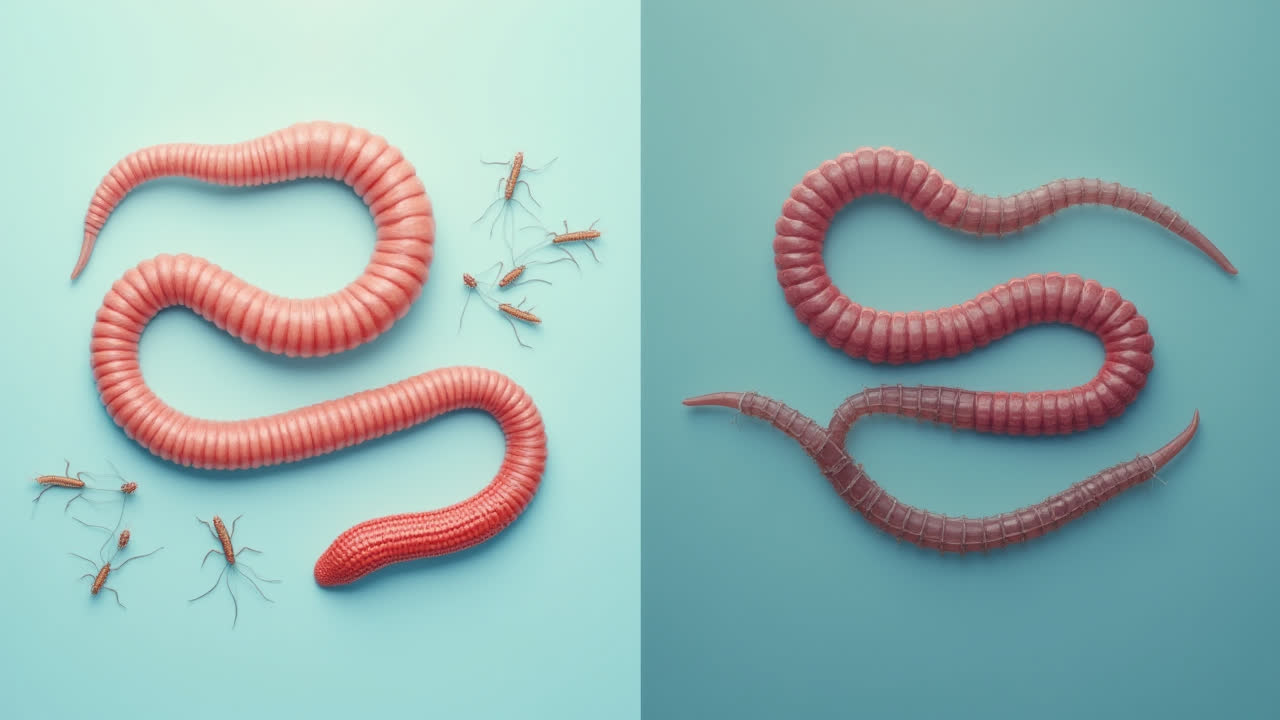
When it comes to intestinal parasites, you're most likely to encounter two main culprits: roundworms and tapeworms. These parasitic worms might seem similar at first glance, but they're actually quite different. Today, we'll dive deep into understanding what sets these two types of worms apart and how they might affect you or your pets.
Let's be honest - nobody likes thinking about worms living inside them. But here's the thing: these parasites are more common than you might think. Understanding their differences could help you identify and treat infections more effectively. Trust me, after researching this topic extensively, I've learned that knowledge really is power when it comes to parasitic infections.
Body Structure: The Most Obvious Difference
If you've ever wondered why they're called "roundworms" and "tapeworms," the answer lies in their body structures. Roundworms have a cylindrical body that tapers to fine points at each end, resembling a tiny earthworm. Picture something like a tube of paint - round when viewed from the end, but elongated in shape.
On the flip side, tapeworms are flat as a pancake - literally. They have a ribbon-like appearance that earned them their name. What's fascinating is how these flat bodies can grow incredibly long. Some species can stretch up to 15 meters! Imagine finding that in your system. (Okay, maybe don't imagine it too hard.)
| Feature | Roundworm | Tapeworm |
|---|---|---|
| Body Shape | Cylindrical, tapered ends | Flat, ribbon-like |
| Segmentation | Unsegmented | Segmented (proglottids) |
| Size Range | Up to 35 cm | 1 mm to 15 m |
| Outer Covering | Hard cuticle | No cuticle |
| Head Structure | Sharp stylet for sucking | Scolex with tentacles |
| Digestive System | Complete | Incomplete |
| Movement Pattern | Gliding | Thrashing |
| Classification | Phylum Nematoda | Class Cestoda |
Scientific Classification: Where These Worms Belong
Here's where things get a bit more technical (but stick with me - it's actually pretty interesting). Roundworms belong to the phylum Nematoda, while tapeworms are classified under the class Cestoda within the phylum Platyhelminthes. What does this mean in plain English?
Think of it like family trees. All roundworms share common ancestors within the Nematoda family, while tapeworms are part of the larger flatworm family (Platyhelminthes). It's like how all dogs are part of the canine family, but wolves and coyotes have their own distinct branches. The scientific community has identified over 80,000 roundworm species and more than 5,000 tapeworm species. That's a lot of worms!
Transmission: How These Parasites Find Their Hosts
Now, here's something important: understanding how these parasites spread can help you avoid them. Roundworms typically transmit through contaminated soil or fecal matter. Kids playing in sandboxes? They might be at higher risk. Walking barefoot in areas where animals have defecated? Another risk factor.
Tapeworms, on the other hand, usually make their way into hosts through undercooked meat or infected fleas. This is why veterinarians often recommend regular flea control for pets - those little jumping bugs can carry tapeworm larvae. I remember my neighbor's cat had a terrible tapeworm infection after a flea problem got out of hand. It was quite a wake-up call for responsible pet ownership.
Symptoms and Health Effects
The symptoms of these infections can vary dramatically. Roundworm infections often cause lung problems, especially in severe cases. You might experience coughing, wheezing, or even pneumonia-like symptoms. Some types, like hookworms, can lead to anemia from blood loss. The Ascaris species can grow quite large and potentially cause intestinal blockages. Yikes!
Tapeworm infections, while often less dramatic, can still be concerning. Weight loss is common, despite normal or increased appetite. Have you ever wondered why someone seems to eat constantly but never gains weight? Sometimes, a tapeworm might be the culprit. Fatigue and nutritional deficiencies can also occur as the worm absorbs nutrients meant for you.
Diagnosis and Treatment
Diagnosing these parasites requires different approaches. Roundworms are typically identified through fecal flotation exams, where eggs float to the surface of a special solution. Sometimes, adult worms might be visible in vomit or stool. Not exactly a pleasant thought, but it happens.
For tapeworms, doctors look for segments (proglottids) in stool samples. These segments can sometimes be seen with the naked eye, looking like small grains of rice. Both types of infections can be treated with antiparasitic medications, though the specific drugs differ between roundworms and tapeworms.
Prevention: Keeping These Parasites at Bay
You know what they say: prevention is better than cure. For roundworm prevention, good hygiene is crucial. Wash your hands thoroughly after gardening or handling soil. Keep children's sandboxes covered when not in use. For pet owners, regular deworming is essential - consult your vet for the appropriate schedule.
Tapeworm prevention focuses on food safety and flea control. Cook meat thoroughly to kill any larvae present. If you hunt or fish, be extra careful with wild game preparation. For pet owners, maintaining a flea-free environment is critical. I've learned from experience that consistent flea prevention saves a lot of headache later on.
When to Seek Medical Help
Sometimes, people ignore mild symptoms of parasitic infections, hoping they'll go away on their own. But here's the reality: these infections rarely resolve without treatment. If you notice unexplained weight loss, abdominal pain, visible worms in stool, or persistent fatigue, it's time to see a healthcare provider.
For pet owners, watch for similar signs in your animals: changes in appetite, visible worms around the anus, scooting behavior, or unusual weight loss. Your vet can perform simple tests to identify the type of worm and recommend appropriate treatment. Early intervention prevents complications and transmission to other family members.
Frequently Asked Questions
Can humans get both roundworms and tapeworms from their pets?
Yes, humans can contract certain types of roundworms from pets, particularly through direct contact with contaminated soil or feces. However, most tapeworms that infect dogs and cats don't transfer directly to humans. The exception is the dwarf tapeworm, which can spread between humans and some pets. Regular deworming of pets and good hygiene practices significantly reduce transmission risks.
How long do these parasitic infections last without treatment?
Both roundworm and tapeworm infections can persist for months or even years without treatment. Roundworms like Ascaris can survive in the host for up to 2 years, while tapeworms can live up to 20 years in human hosts. Without treatment, these parasites continue reproducing and can lead to serious health complications.
Are over-the-counter deworming medications effective for both types of parasites?
Over-the-counter deworming medications can be effective, but different parasites require specific treatments. Roundworms typically respond to medications containing pyrantel pamoate or albendazole, while tapeworms often require praziquantel. For best results, confirm the type of worm through testing before starting treatment, as incorrect medication may not resolve the infection.
Key Takeaways
Understanding the differences between roundworms and tapeworms isn't just academic knowledge - it's practical information that can help protect your health and that of your loved ones. While both are parasitic intestinal worms, their distinct characteristics affect everything from how they're transmitted to how they're treated.
The cylindrical roundworms and flat tape-like tapeworms may both be unwelcome guests in our systems, but knowledge about their differences empowers us to prevent, identify, and treat these infections effectively. Remember, early treatment makes a huge difference in outcomes.