Simple Diffusion vs Facilitated Diffusion: Complete Comparison Guide
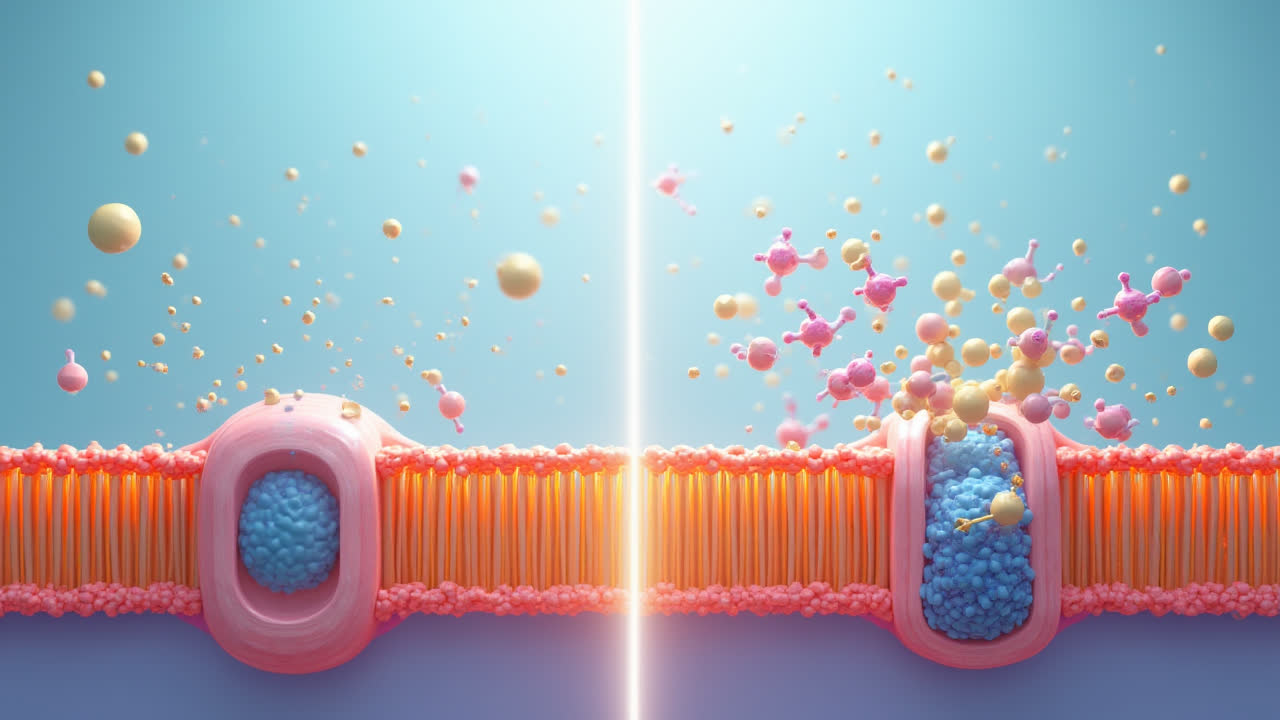
Cell membranes are remarkable structures that regulate what enters and exits our cells. Among the various transport mechanisms, simple diffusion and facilitated diffusion stand out as two essential passive transport processes. While both move molecules from areas of higher concentration to lower concentration without energy expenditure, they work in fundamentally different ways.
Have you ever wondered how oxygen reaches your cells or how glucose enters them? These processes rely on different types of diffusion. In this comprehensive guide, we'll explore the mechanisms, characteristics, and biological significance of these two transport methods.
The main difference between simple diffusion and facilitated diffusion is that simple diffusion is an unassisted transport method where molecules move directly through the cell membrane, while facilitated diffusion requires transport proteins to help molecules cross the membrane barrier.
What is Passive Transport?
Before diving into the specific types of diffusion, it's important to understand the broader category they belong to: passive transport. Passive transport encompasses all movement of substances across cell membranes that doesn't require energy input (ATP).
Instead, passive transport relies on the natural tendency of molecules to move from areas of higher concentration to areas of lower concentration—a phenomenon known as moving down the concentration gradient. This is driven by entropy, which is essentially the universe's tendency toward disorder and equilibrium.
There are four main types of passive transport mechanisms:
- Simple diffusion
- Facilitated diffusion
- Osmosis (diffusion of water)
- Filtration
Each of these mechanisms plays a crucial role in cellular function, but today we're focusing on the first two: simple and facilitated diffusion. I've personally found that understanding these fundamental processes helps make sense of countless biological phenomena, from how medications work to why certain diseases affect our cells.
Simple Diffusion: The Direct Approach
Simple diffusion is exactly what it sounds like—simple and direct. In this process, molecules move freely through the phospholipid bilayer of the cell membrane without any assistance from other proteins or structures. The movement occurs spontaneously, following the concentration gradient until equilibrium is reached.
Think of simple diffusion like people entering a half-empty movie theater through multiple doors. They naturally spread out to fill the available space without needing any guidance or special passageways. Similarly, molecules undergoing simple diffusion pass directly through the membrane's phospholipid bilayer.
Characteristics of Simple Diffusion
Simple diffusion has several distinctive features that set it apart:
- It works best for small, nonpolar molecules like oxygen, carbon dioxide, and ethanol
- No transport proteins or energy are required
- The rate depends on the concentration gradient, temperature, and molecular size
- Molecules move directly through the phospholipid bilayer
- The diffusion rate is proportional to the concentration difference across the membrane
I remember a fascinating experiment from my biology lab where we observed simple diffusion using a dye in water. The way the color spread from high concentration to low—without any stirring or intervention—perfectly illustrated this elegant, energy-free transport mechanism.
Facilitated Diffusion: Transport with Assistance
Unlike simple diffusion, facilitated diffusion requires help. This process uses specialized transmembrane proteins to help certain molecules cross the cell membrane. These proteins act as facilitators or helpers, hence the name "facilitated" diffusion.
To continue our movie theater analogy, facilitated diffusion would be like having special doorways with attendants who check tickets and guide specific people to their seats. Not everyone can use these special doorways—only those with the right "ticket" (molecular structure).
Transport Proteins in Facilitated Diffusion
Two main types of transport proteins enable facilitated diffusion:
- Channel proteins: These form hydrophilic tunnels or pores across the membrane, allowing specific molecules to pass through. Some are always open, while others are "gated" and only open under certain conditions.
- Carrier proteins: These bind to specific molecules, change their conformation (shape), and release the molecules on the other side of the membrane. Examples include glucose transporters and amino acid permeases.
A specialized type of channel protein called aquaporins deserves special mention. These remarkable proteins facilitate the rapid movement of water molecules across the cell membrane while preventing the passage of ions and other solutes. Without them, many of our physiological processes would be severely compromised.
Sometimes I find it helpful to think about facilitated diffusion in terms of everyday experiences. For instance, when I'm carrying groceries into my apartment building, I need my key card to access the building (like a molecule needing a specific carrier protein). The door doesn't provide energy to move me inside—gravity and my own momentum do that—but it does provide the necessary pathway.
Comparing Simple Diffusion and Facilitated Diffusion
| Characteristic | Simple Diffusion | Facilitated Diffusion |
|---|---|---|
| Definition | Unassisted movement of molecules from higher to lower concentration | Transport of substances through a concentration gradient using carrier molecules |
| Transport Mechanism | Directly through phospholipid bilayer | Through transmembrane proteins (channels or carriers) |
| Energy Requirement | No ATP required | No ATP required |
| Types of Molecules Transported | Small, nonpolar molecules (O₂, CO₂, ethanol) | Large or polar molecules (glucose, amino acids, ions) |
| Rate at Low Concentrations | Relatively slow | Relatively fast (more efficient) |
| Saturation Kinetics | Not subject to saturation | Subject to saturation when all carriers are occupied |
| Susceptibility to Inhibition | Not easily inhibited | Can be inhibited by competitive inhibitors |
| Specificity | Low specificity | High specificity for transported molecules |
Biological Significance and Examples
Both simple and facilitated diffusion play vital roles in maintaining cellular function and homeostasis. Let's explore some real-world examples of these processes in action.
Simple Diffusion Examples
- Gas Exchange in Lungs: Oxygen and carbon dioxide move across the respiratory membrane through simple diffusion, enabling our cells to receive oxygen and eliminate waste gases.
- Absorption of Fatty Acids: Short-chain fatty acids can diffuse directly through the intestinal epithelium.
- Movement of Alcohol: Ethanol readily diffuses across cell membranes, which is why alcohol can affect so many body systems so quickly.
- Transfer of Lipid-Soluble Hormones: Steroid hormones like estrogen and testosterone can pass directly through cell membranes to reach their intracellular receptors.
Facilitated Diffusion Examples
- Glucose Transport: GLUT proteins (glucose transporters) facilitate the movement of glucose into cells, which is essential for cellular energy production.
- Ion Channels: Specialized channels allow for the passage of ions like potassium, sodium, calcium, and chloride, which is crucial for nerve impulse transmission and muscle contraction.
- Water Movement via Aquaporins: These specialized channel proteins facilitate the rapid movement of water molecules across cell membranes in tissues like the kidneys.
- Amino Acid Transport: Carrier proteins help move amino acids across the cell membrane for protein synthesis.
I've always found it fascinating how these seemingly simple mechanisms are responsible for so many critical physiological functions. When I think about how every breath I take relies on simple diffusion to deliver oxygen to my cells, it gives me a new appreciation for these fundamental cellular processes.
Factors Affecting Diffusion Rates
Several factors influence how quickly molecules move through simple or facilitated diffusion:
Concentration Gradient
The steeper the concentration difference across the membrane, the faster diffusion occurs. This is why we often breathe harder during exercise—to maintain a steep oxygen gradient that facilitates rapid diffusion into our bloodstream.
Temperature
Higher temperatures increase the kinetic energy of molecules, causing them to move more rapidly and thus diffuse faster. This is one reason why fever can accelerate certain metabolic processes.
Molecular Size
Smaller molecules generally diffuse more rapidly than larger ones. This explains why gases like oxygen diffuse quickly, while larger molecules like glucose require facilitated diffusion.
Membrane Permeability
The composition and thickness of the membrane affect how easily molecules can pass through. More permeable membranes allow for faster diffusion.
Surface Area
A larger surface area allows for more diffusion to occur simultaneously. This is why organs involved in exchange processes—like the lungs and small intestine—have highly folded surfaces that maximize area.
Understanding these factors helps explain many biological phenomena. For example, the alveoli in our lungs have an enormous surface area (about the size of a tennis court when spread out!) and very thin membranes, both of which maximize gas diffusion efficiency.
Clinical Relevance and Disorders
Disruptions in diffusion processes can lead to various pathological conditions:
Cystic Fibrosis
This genetic disorder affects chloride channel proteins (CFTR), disrupting facilitated diffusion of chloride ions across cell membranes. The result is abnormally thick, sticky mucus that clogs the lungs and digestive system.
Diabetes Mellitus
In some forms of diabetes, cells have reduced sensitivity to insulin, which normally triggers the insertion of GLUT4 glucose transporters into cell membranes. Without these transporters, facilitated diffusion of glucose is impaired, leading to elevated blood sugar levels.
Pulmonary Edema
When the alveolar-capillary membrane thickens due to fluid accumulation, simple diffusion of oxygen is impaired, leading to hypoxemia (low blood oxygen).
Channelopathies
These are diseases caused by defects in channel proteins, affecting facilitated diffusion. Examples include certain forms of epilepsy, migraine, ataxia, and periodic paralysis.
I once worked with a patient with cystic fibrosis, and seeing firsthand how a single defective channel protein could cause such widespread impacts throughout the body really drove home the importance of these molecular transport mechanisms.
FAQ About Simple and Facilitated Diffusion
Do simple diffusion and facilitated diffusion require energy?
No, neither simple diffusion nor facilitated diffusion requires energy in the form of ATP. Both are passive transport processes that rely on the kinetic energy of molecules and the concentration gradient. This is what distinguishes them from active transport, which does require ATP to move molecules against their concentration gradient. However, the proteins involved in facilitated diffusion were synthesized using cellular energy, even though the transport process itself doesn't consume ATP.
Can facilitated diffusion move molecules against the concentration gradient?
No, facilitated diffusion cannot move molecules against their concentration gradient. Like simple diffusion, facilitated diffusion only moves molecules from areas of higher concentration to areas of lower concentration. The transport proteins (carriers or channels) simply facilitate this movement by providing a pathway through the cell membrane. To move molecules against their concentration gradient (from low to high concentration), cells must use active transport mechanisms that require energy input from ATP.
Which diffusion type is more efficient for glucose transport into cells?
Facilitated diffusion is more efficient for glucose transport into cells. Glucose is a relatively large, polar molecule that cannot easily pass through the phospholipid bilayer via simple diffusion. Instead, it relies on glucose transporter proteins (GLUT family) that facilitate its movement across the cell membrane. These transporters significantly increase the rate of glucose uptake compared to what would be possible through simple diffusion alone. This efficient transport system is crucial for providing cells with the glucose they need for energy production.
Conclusion
Simple diffusion and facilitated diffusion represent two elegant solutions to the fundamental challenge of moving molecules across cell membranes. While both operate without energy expenditure and follow concentration gradients, they serve different but complementary roles in cellular function.
Simple diffusion provides a direct route for small, nonpolar molecules to enter cells, while facilitated diffusion opens pathways for larger or charged molecules that would otherwise be excluded by the hydrophobic membrane barrier.
Together, these passive transport mechanisms ensure that cells can efficiently acquire essential nutrients, eliminate waste products, and maintain the delicate balance necessary for life. Understanding these processes gives us insight not only into normal physiology but also into the molecular basis of numerous diseases and potential therapeutic approaches.
The next time you take a breath or enjoy a meal, consider the trillions of diffusion events happening in your body at that very moment—silent, energy-free movements that sustain your every cell.