Totalitarian vs Authoritarian: 7 Critical Differences Explained
Totalitarian vs Authoritarian: Understanding the Key Differences
When discussing political systems that restrict freedom, two terms often come up: totalitarian and authoritarian. While these government types share similarities in how they exert control over their citizens, they differ significantly in scope and implementation. Have you ever wondered exactly how these systems operate and what distinguishes one from the other?
Both totalitarian and authoritarian governments restrict individual freedoms, but the extent and methods of control create crucial distinctions between them. In this comprehensive guide, we'll explore the fundamental differences, historical examples, and real-world implications of these restrictive political systems.
What Is a Totalitarian Government?
A totalitarian government represents the most extreme form of political control, where the state exerts unlimited power over virtually all aspects of public and private life. This form of government requires complete subservience from its citizens, eliminating all individual freedoms in favor of state control.
The term "totalitarian" was coined by Italian dictator Benito Mussolini in the 1920s to describe his fascist vision for Italy. He famously characterized totalitarianism as "all within the state, none outside the state, and none against the state." This phrase perfectly captures the all-encompassing nature of totalitarian control—nothing exists outside the state's purview.
In a totalitarian system, the government controls every facet of society: economy, politics, culture, education, religion, and even personal morality and reproductive rights. Fear is an essential tool used by totalitarian regimes to maintain this absolute control. Citizens live with constant surveillance, propaganda, and the threat of severe punishment for any perceived dissent.
Notable examples of totalitarian regimes include Nazi Germany under Adolf Hitler, the Soviet Union under Joseph Stalin, North Korea under the Kim dynasty, and Iraq under Saddam Hussein. In each case, a single leader or ruling party exercised complete control, suppressing all opposition through violence, intimidation, and propaganda.
What Is an Authoritarian Government?
An authoritarian government also severely limits political freedoms but typically allows citizens a degree of personal freedom not found in totalitarian states. Authoritarian regimes demand strict obedience to governmental authority, but they don't necessarily attempt to control every aspect of private life.
In authoritarian systems, political processes and public policies are tightly controlled without constitutional accountability. The ruling party or leader maintains firm control over political institutions, including legislatures, political parties, and interest groups. However, unlike totalitarian regimes, authoritarian governments have less influence over individual beliefs and preferences.
Citizens under authoritarian rule may enjoy some personal freedoms in areas the government doesn't consider threatening to its power. They might have limited choices in cultural activities, economic participation, or religious practice—as long as these activities don't challenge the political status quo.
Historical examples of authoritarian regimes include Cuba under Fidel Castro, Venezuela under Hugo Chávez, and many military dictatorships across Latin America, Africa, and Asia throughout the 20th century. These governments maintained strict political control while allowing citizens some degree of personal autonomy in non-political spheres.
Key Characteristics Comparison
| Characteristic | Totalitarian Regimes | Authoritarian Regimes |
|---|---|---|
| State Control | Complete control over all aspects of public and private life | Strong control over political life, limited control over private life |
| Individual Freedom | Virtually none; all freedom subordinated to the state | Limited personal freedoms in non-political spheres |
| Ideology | Typically built around a comprehensive ideology (fascism, communism) | May lack a comprehensive ideology; focused on maintaining power |
| Social Institutions | Complete suppression of traditional social institutions | May allow some traditional institutions to exist if they don't threaten power |
| Economic Control | State controls all aspects of the economy | May allow some private economic activity under state oversight |
| Media and Information | Complete censorship and state propaganda | Heavy censorship of political content; may allow non-political expression |
| Popular Support | Often demands active participation and enthusiasm | Usually content with passive obedience and non-interference |
| Historical Examples | Nazi Germany, Stalin's Soviet Union, North Korea | Pinochet's Chile, Franco's Spain, Castro's Cuba |
The Spectrum of Political Control
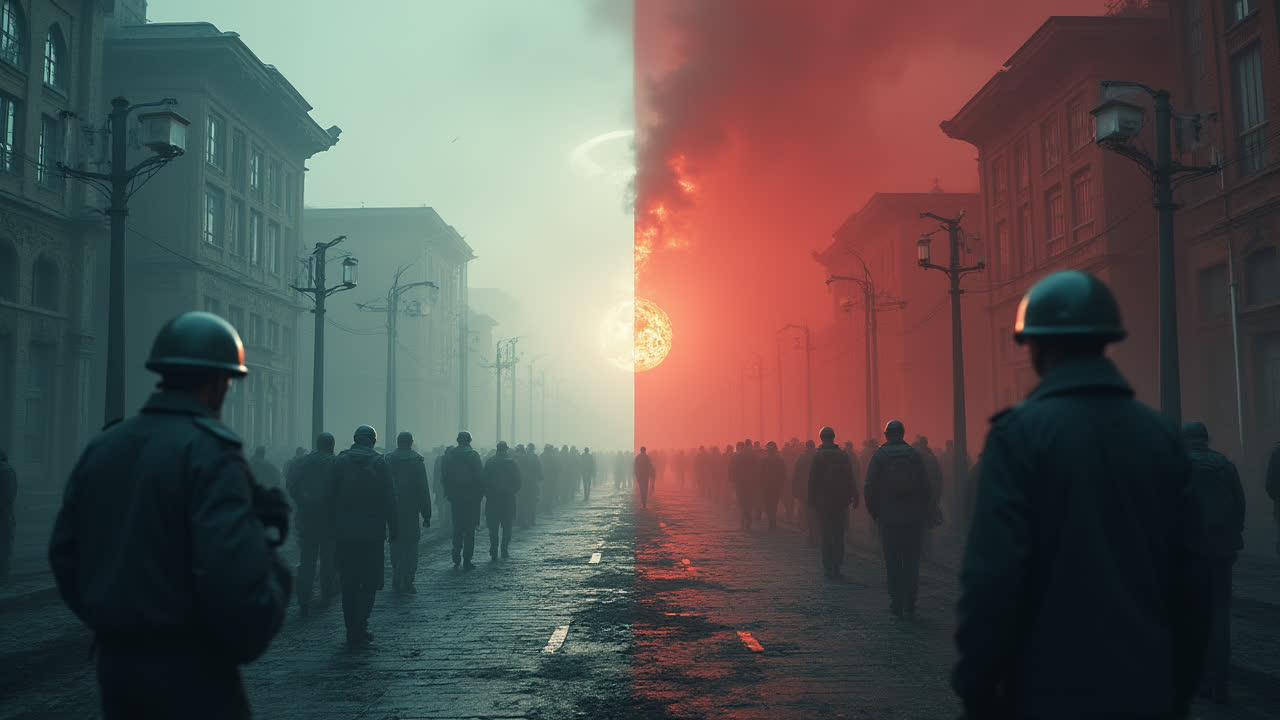
Rather than viewing totalitarian and authoritarian systems as completely separate categories, it's helpful to understand them as points on a spectrum of political control. Some regimes may exhibit characteristics of both types, and governments can evolve from one form to another over time.
I've observed that totalitarian systems tend to be more ideologically driven, requiring citizens not only to obey but also to actively believe in and support the state's ideology. Authoritarian regimes, by contrast, often focus more pragmatically on maintaining power without demanding complete ideological conformity.
The intensity of control can also vary within each category. Some authoritarian states allow significant economic freedom while tightly restricting political rights, while others may permit limited political expression but maintain strict control over economic activity. Totalitarian regimes generally exhibit high control across all dimensions, though even here, the degree of effectiveness varies based on the state's capacity and resources.
It's worth noting that the transition between these systems isn't always linear. Democratic countries can backslide into authoritarianism, and authoritarian regimes can either reform toward democracy or harden into totalitarianism. These shifts often occur during periods of social, economic, or political crisis.
Impact on Citizens
The difference between totalitarian and authoritarian rule has profound implications for the daily lives of citizens. Under totalitarian regimes, individuals face constant surveillance and must demonstrate active loyalty to the state. Every aspect of life—from education and work to family relationships and leisure activities—is subject to government oversight and regulation.
Citizens in totalitarian states often experience severe psychological effects from living under such intense scrutiny. Fear becomes a constant companion, and individuals develop complex strategies for survival, including self-censorship and performative compliance. The state's intrusion into private life erodes trust even within families, as anyone could potentially report "disloyal" behavior to authorities.
In authoritarian systems, citizens typically experience a somewhat different reality. While political expression remains dangerous, people may find spaces for authentic personal connection and limited self-determination in non-political areas of life. The psychological burden, while still significant, may be less all-encompassing than under totalitarianism.
I once spoke with someone who had lived under an authoritarian military regime. They described a strange dual existence: careful silence about politics combined with relatively normal family and community life. "We knew where the lines were," they explained, "and as long as we stayed away from those topics, we could live our lives." This experience differs markedly from accounts of life under totalitarian control, where no aspect of life feels truly private or safe from state intervention.
Frequently Asked Questions
Can a country transition from totalitarian to authoritarian rule?
Yes, countries can transition from totalitarian to authoritarian rule, often during periods of reform or following the death of a dictator. This transition typically involves the relaxation of control over private life while maintaining strict political restrictions. For example, some former Soviet bloc countries shifted from totalitarianism to authoritarianism before eventually moving toward democracy. However, these transitions are complex and don't always follow a straight path toward greater freedom.
Do totalitarian and authoritarian regimes always have a single leader?
No, although many totalitarian and authoritarian regimes are associated with powerful individual leaders, both forms can also operate under collective leadership. Totalitarian states are often ruled by a single political party (like communist parties in one-party states), and authoritarian systems can be governed by military juntas, oligarchies, or other collective entities. The defining characteristic is the concentration of power and limitation of political freedom, not necessarily the number of people holding that power.
How do economic systems relate to totalitarian and authoritarian governments?
Totalitarian regimes typically exercise comprehensive control over the economy, whether through state ownership (as in communist systems) or through strict regulation of nominally private enterprises (as in fascist regimes). Authoritarian governments, by contrast, show more variation in economic approaches. Some authoritarian states embrace market economics while maintaining political control, creating what some scholars call "authoritarian capitalism." Others maintain significant state involvement in the economy but allow some private enterprise in non-strategic sectors. The key distinction is that totalitarian systems view economic control as necessary for complete social control, while authoritarian regimes may see economic freedom as compatible with political restrictions.
Conclusion
Understanding the differences between totalitarian and authoritarian systems helps us recognize the varying degrees of political control that exist outside of democratic governance. While both restrict fundamental freedoms, the totalitarian state's ambition to control all aspects of public and private life represents a more extreme form of governance than the authoritarian focus on maintaining political power.
As we analyze global political systems, recognizing these distinctions allows for more nuanced discussions about governance, human rights, and political development. It also reminds us that the path between freedom and oppression contains many gradations and potential transitions.
The study of these political systems isn't merely academic—it provides crucial insights into how societies function under different forms of governance and the profound impacts these structures have on individual lives. By examining both the similarities and differences between totalitarian and authoritarian rule, we gain a deeper understanding of political power and its consequences.


Related Posts