Tropical Rainforest vs Deciduous Forest: 8 Key Differences Explained
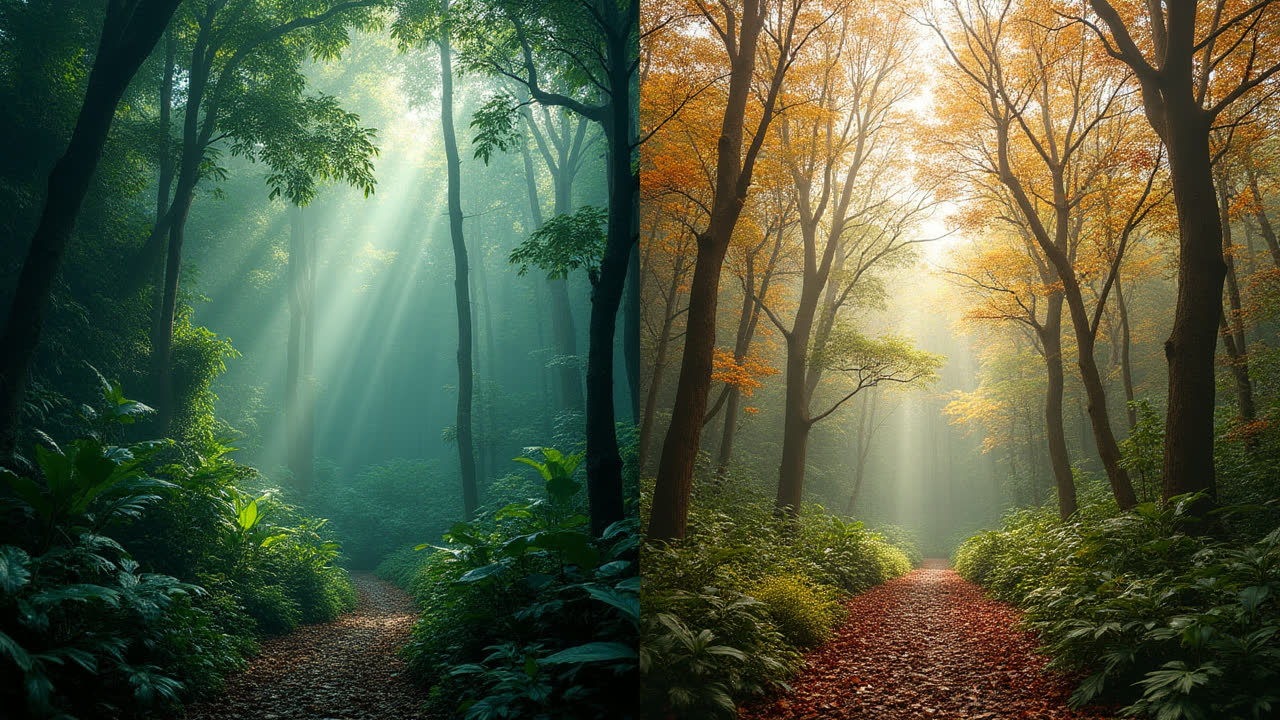
The world's forests come in many varieties, each with its unique characteristics and ecological roles. Among these, tropical rainforests and deciduous forests stand as two distinctly different yet equally fascinating ecosystems. Have you ever wondered what makes these forest types so different from one another? From climate conditions to the plants and animals that call them home, these forests represent two contrasting approaches to survival in our planet's diverse environments.
While walking through a lush Amazon rainforest feels worlds apart from strolling through a colorful autumn woodland in New England, both ecosystems play crucial roles in maintaining Earth's biodiversity and climate stability. I've had the opportunity to visit both types of forests, and the sensory experiences couldn't be more different - from the constant humidity and cacophony of sounds in a rainforest to the crisp air and rustling leaves of a deciduous woodland in fall.
What Is a Tropical Rainforest?
A tropical rainforest is a dense, lush forest characterized by high biodiversity and significant rainfall, typically receiving between 80-400 inches of rain annually. These magnificent ecosystems occur in the equatorial zone between the Tropic of Cancer and the Tropic of Capricorn, in areas that benefit from warm temperatures and year-round sunlight. The constant warmth and moisture create perfect conditions for explosive plant growth and incredible species diversity.
Perhaps the most famous tropical rainforest in the world is the Amazon Basin in South America, which represents the largest continuous rainforest ecosystem on our planet. The second and third largest tropical rainforest areas are found in the Congo Basin in Central Africa and across Southeast Asia, respectively. These forests aren't just beautiful - they're often called the "lungs of the planet" because they produce enormous amounts of oxygen while absorbing carbon dioxide.
The structure of a rainforest is remarkably complex, featuring four distinct layers that create numerous ecological niches. At the very top sits the emergent layer, where scattered tall trees reach heights of 200 feet or more, towering above everything else. Below this is the upper canopy, a dense layer of vegetation about 60-90 feet above the ground that forms a kind of continuous roof over the forest. This canopy is so thick that it blocks much of the sunlight, creating shadowy conditions below. The understory exists in this dimmer light, while the forest floor receives only about 2% of the available sunlight, resulting in relatively sparse vegetation despite the otherwise perfect growing conditions.
What always amazes me about tropical rainforests is their incredible diversity. Though they cover just 6% of Earth's land surface, scientists estimate they contain more than half of all plant and animal species! The constant warmth and moisture mean that trees don't need to shed their leaves seasonally - they're evergreen, maintaining their foliage year-round in a perpetual growing season.
What Is a Deciduous Forest?
Deciduous forests present a completely different forest ecosystem, defined primarily by their most distinctive characteristic: trees that shed their leaves annually. The very word "deciduous" refers to this leaf-dropping behavior, which occurs in response to seasonal changes. Unlike the constant conditions of tropical rainforests, deciduous forests experience four distinct seasons - spring, summer, autumn, and winter - each bringing dramatic changes to the forest ecosystem.
When people think of deciduous forests, they often picture the spectacular autumn colors that appear as leaves change from green to vibrant reds, oranges, and yellows before falling. This colorful display isn't just beautiful - it's the visible evidence of the trees' adaptation to surviving cold winter conditions. By dropping their leaves, trees enter a dormant state that helps them conserve energy during the cold months when photosynthesis would be inefficient.
Common tree species found in deciduous forests include oak, maple, beech, birch, and ash. These hardy species have evolved specific adaptations to thrive in environments with seasonal temperature variations. The forest floor in deciduous woodlands often features rich soil created by years of decomposing leaf litter, supporting diverse understory plants including wildflowers, ferns, and shrubs.
Deciduous forests can be further categorized based on their location into three types: temperate, subtropical, and tropical deciduous forests. Temperate deciduous forests are the most familiar to many people, occurring in regions like eastern North America, western Europe, and northeastern Asia. These areas typically experience cold winters and warm summers with moderate rainfall distributed throughout the year.
The animal life in deciduous forests has also evolved fascinating adaptations to the changing seasons. Some animals migrate to warmer areas during winter, others hibernate, and still others remain active by growing thicker fur or feathers and changing their diets. It's a complex ecosystem that demonstrates nature's remarkable ability to adapt to cyclical environmental changes.
Key Differences Between Tropical Rainforests and Deciduous Forests
Now that we understand the basic characteristics of both forest types, let's explore the major differences between them in greater detail. These distinctions help explain how each forest type functions as an ecosystem and why they look and feel so different from one another.
| Characteristic | Tropical Rainforest | Deciduous Forest |
|---|---|---|
| Location | Equatorial regions between Tropic of Cancer and Tropic of Capricorn | Temperate regions in North America, Europe, and Asia; some subtropical and tropical regions |
| Climate | Consistently warm and humid with high rainfall year-round (80-400 inches annually) | Four distinct seasons with temperature variations; moderate rainfall (30-60 inches annually) |
| Trees and Foliage | Mainly evergreen trees that maintain leaves year-round | Deciduous trees that shed leaves annually in autumn |
| Biodiversity | Extremely high biodiversity (over 50% of world's species in 6% of land area) | Moderate biodiversity with specialized seasonal adaptations |
| Forest Structure | Complex four-layer structure: emergent layer, canopy, understory, and forest floor | Typically two or three layers: canopy, understory, and forest floor |
| Soil Characteristics | Often nutrient-poor as nutrients are quickly absorbed by vegetation | Rich in nutrients from decomposing leaf litter each autumn |
| Animal Adaptations | Adaptations for constant climate (e.g., climbing, flying, bright colors) | Adaptations for seasonal changes (e.g., hibernation, migration, food storage) |
| Human Impact | Highly threatened by deforestation for agriculture, logging, and mining | Historically reduced for agriculture and settlement but more stable in recent decades |
Climate and Seasonal Variations
Perhaps the most fundamental difference between these forest types lies in their climate patterns. Tropical rainforests maintain remarkably consistent conditions throughout the year. The temperature typically ranges between 70-85°F (21-30°C) year-round, with minimal fluctuation. Rainfall is abundant and regular, often exceeding 100 inches annually, with some rainforests receiving over 400 inches of precipitation per year! This consistent moisture and warmth create ideal growing conditions without seasonal interruptions.
In sharp contrast, deciduous forests experience pronounced seasonal changes. Summer temperatures might reach similar levels to rainforests, but winter temperatures can drop below freezing for extended periods. Rainfall is more moderate, typically between 30-60 inches annually, and may be distributed throughout the year or concentrated in certain seasons depending on the region. These dramatic seasonal shifts drive the characteristic leaf-shedding behavior that defines deciduous forests.
I remember visiting a deciduous forest in Japan during autumn several years ago, and the transformation was breathtaking. Trees that had been lush and green just weeks earlier had turned into a canvas of fiery colors. This visible adaptation to seasonal change is something you simply won't see in a tropical rainforest, where the scenery remains relatively constant year-round despite perhaps having wet and dry seasons.
Biodiversity and Ecological Importance
Both forest types support remarkable biodiversity, but they do so in different ways. Tropical rainforests are unmatched in their sheer number of species. A single hectare of Amazon rainforest might contain over 750 tree species and thousands of animal species. The constant climate allows for extreme specialization, with many species evolving to fill very specific ecological niches. This has resulted in countless fascinating adaptations - from leaf-cutter ants that farm fungus to poison dart frogs with toxic skin pigments.
Deciduous forests, while less diverse overall, feature species with remarkable adaptations for seasonal living. Rather than specializing for stable conditions, these plants and animals have evolved to thrive despite dramatic environmental changes. Consider the sugar maple, which not only produces vibrant autumn foliage but also stores energy in the form of sap that can be harvested for maple syrup. Or think about bears that fatten up on autumn berries before entering hibernation during the resource-scarce winter months.
Both forest types provide critical ecosystem services. Tropical rainforests are often called "carbon sinks" because they absorb enormous amounts of carbon dioxide, helping to regulate our planet's climate. They also play crucial roles in water cycling, returning moisture to the atmosphere through transpiration. Deciduous forests also store carbon, prevent soil erosion, and provide important wildlife habitat. Additionally, the seasonal leaf drop in deciduous forests creates rich soil as leaves decompose, supporting diverse soil ecosystems.
During my rainforest visits, I've been struck by the constant activity - at any moment, countless interactions are occurring between species. In deciduous forests, the rhythm is different - there's a clear cycle of growth, reproduction, preparation, and dormancy that repeats annually. Both approaches have proven successful evolutionary strategies, allowing these ecosystems to thrive in their respective environments.
Conservation Challenges
Both tropical rainforests and deciduous forests face significant conservation challenges, though the nature and severity of these threats differ. Tropical rainforests are disappearing at an alarming rate, primarily due to clearing for agriculture (especially cattle ranching and palm oil plantations), logging, and mining operations. According to some estimates, we're losing rainforest at a rate of approximately 150 acres per minute globally - a staggering figure that represents an enormous threat to biodiversity.
Deciduous forests, particularly in Europe and North America, experienced extensive clearing during earlier periods of human development. However, in many developed regions, deciduous forest cover has actually increased in recent decades as agricultural land has been abandoned and allowed to regenerate. Nevertheless, these forests still face threats from urban development, climate change, and the introduction of non-native pests and diseases that can devastate native tree species.
Climate change presents complex challenges for both forest types. For tropical rainforests, changing precipitation patterns could alter the very conditions that define these ecosystems. For deciduous forests, warming temperatures may disrupt the seasonal cues that trees rely on, potentially affecting leaf development, flowering times, and interactions with pollinators and other wildlife.
Conservation efforts for both forest types focus on establishing protected areas, promoting sustainable management practices, and addressing the underlying economic factors that drive deforestation. Organizations worldwide are working to preserve these vital ecosystems, recognizing that their loss would represent not just a tragedy for biodiversity but also a serious blow to global climate stability.
Frequently Asked Questions
Why do leaves change color in deciduous forests but not in rainforests?
Leaves in deciduous forests change color in autumn because trees stop producing chlorophyll (the green pigment) as they prepare to shed their leaves for winter. This allows other pigments already present in the leaves—like carotenoids (yellow/orange) and anthocyanins (red/purple)—to become visible. In tropical rainforests, trees don't experience the seasonal temperature drops that trigger leaf shedding, so they continuously produce chlorophyll year-round, maintaining their green color. The constant warm, humid conditions in rainforests allow for year-round photosynthesis without the need for a dormant period.
Which forest type stores more carbon: tropical rainforests or deciduous forests?
Tropical rainforests generally store more carbon per unit area than deciduous forests. This is due to several factors: rainforests have greater biomass density with taller trees and more vegetation layers; they grow year-round without dormant periods; and they typically have more wood volume per acre. However, deciduous forests still play an important role in carbon sequestration, particularly in their soils, which can be quite carbon-rich from centuries of leaf decomposition. Both forest types are crucial for climate regulation, and the preservation of all forest ecosystems is essential for maintaining global carbon balance.
How do animals adapt differently to life in rainforests versus deciduous forests?
Animals in tropical rainforests have adapted to consistent climate conditions with strategies like specialized diets, arboreal lifestyles (living in trees), bright coloration for recognition or warning, and highly specific ecological niches. In contrast, animals in deciduous forests have evolved to handle seasonal changes through adaptations such as hibernation during winter months, migration to warmer areas, food caching (storing food for scarce periods), seasonal breeding patterns, and changes in coat thickness or color. These different adaptive strategies reflect the fundamental environmental challenges each forest type presents to its inhabitants.
Conclusion
The differences between tropical rainforests and deciduous forests reveal nature's remarkable adaptive capacity. From the consistent warmth and moisture of equatorial regions to the dramatic seasonal changes of temperate zones, forests have evolved distinct strategies to thrive in diverse conditions around our planet.
Tropical rainforests showcase nature's tendency toward specialization and diversity when conditions remain stable, resulting in incredibly complex ecosystems with unmatched biodiversity. Deciduous forests, on the other hand, demonstrate flexibility and resilience in the face of changing conditions, with their annual cycles of growth and dormancy perfectly synchronized with seasonal patterns.
Both forest types face significant challenges in our changing world. As we confront issues like deforestation, habitat fragmentation, and climate change, understanding the unique characteristics and ecological importance of different forest ecosystems becomes increasingly vital. By appreciating the distinct nature of these forests - from the breathtaking autumn colors of a deciduous woodland to the year-round lushness of a tropical rainforest - we might be better motivated to ensure their protection for generations to come.
Have you had the opportunity to visit either of these magnificent forest types? Each offers a completely different but equally awe-inspiring glimpse into the incredible diversity of life on our planet. Whether walking among ancient oaks shedding their golden leaves or standing beneath the towering emergent trees of the Amazon, these experiences connect us to the natural world in profound and memorable ways.


Related Posts